Barcelona is one of Europe's great cities: a place where extraordinary Modernista architecture lines everyday streets, where Mediterranean beaches sit within walking distance of Gothic alleyways built two thousand years ago, and where the food, nightlife, and culture can occupy a visitor for a week without repeating a single experience. It is the capital of Catalonia, a region with its own language, flag, and fierce cultural identity, and that distinctiveness gives the city a character that no other Spanish destination quite matches. Whether you have three days or three weeks, this guide covers the key sights, the real prices, and the practical information that separates a great Barcelona trip from a frustrating one.
The Gaudí Architecture Trail
Antoni Gaudí (1852–1926) transformed Barcelona into an open-air museum of organic, hallucinatory architecture. Seven of his works are UNESCO World Heritage Sites, and no visit to Barcelona is complete without at least three of them.
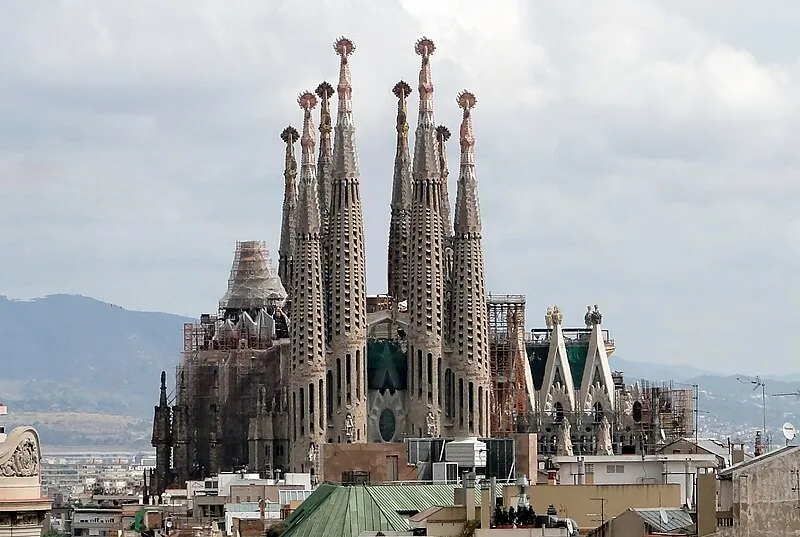
Sagrada Família
The Sagrada Família basilica is the most visited monument in Spain, receiving over 4.5 million visitors per year. Construction began in 1882 and continued under Gaudí from 1883 until his death in 1926, when he was struck by a tram. The building is expected to be completed in 2026, the centenary of his death. The result, when finished, will be the tallest church in the world at 172.5 metres.
Tickets cost €26 for basic entry and €36 for the full experience including the towers. Tower access adds approximately €12 on top of standard admission. Booking in advance online is not optional: same-day tickets are rarely available and the queues for in-person purchases are long enough to consume half a morning. Visit the official website at sagradafamilia.org. The best time to arrive is early morning, when the light enters through the stained glass windows on the Nativity facade and fills the nave with extraordinary colour.
Park Güell
Park Güell, originally designed as a residential garden city that never sold enough houses to succeed commercially, is now one of the most distinctive public parks in Europe. Entry to the Monumental Zone (the famous tiled terrace and mosaic salamander) costs €10 and requires advance booking. The surrounding park is free to access and worth a long walk in itself. The views over the city from the main terrace are among the best available without a cable car.
Passeig de Gràcia: Casa Batlló and Casa Milà
The Passeig de Gràcia is Barcelona's grandest boulevard, and the block between Carrer d'Aragó and Carrer del Consell de Cent is nicknamed the "Block of Discord" because three rival Modernista architects built competing masterpieces on it. Gaudí's Casa Batlló (entrance from €35, evening visits more expensive) is covered in a shimmering mosaic of broken tiles and topped by a spine-like roof. Casa Milà, known as La Pedrera, is a few blocks north: its undulating stone facade and rooftop terrace of twisted chimneys are worth the €28 entry fee. Both offer guided tours included in the ticket price.
The Gothic Quarter and El Born
Barri Gòtic
The Gothic Quarter, or Barri Gòtic, is the oldest part of Barcelona and occupies the site of the original Roman settlement of Barcino. The Barcelona Cathedral (Catedral de la Santa Creu i Santa Eulàlia) sits at its heart: entry is free before 12:30pm, then costs €9 during the afternoon visiting hours. The cathedral's Gothic cloister, home to 13 white geese kept as a symbol of Saint Eulàlia's youth, is one of the most peaceful spots in the old city. The Plaça Reial, a colonnaded square a few minutes' walk south, is lined with restaurants and terrace bars and comes alive in the evenings.
El Born
The El Born neighbourhood, immediately east of the Gothic Quarter, is Barcelona's most creative district. The Picasso Museum at Carrer de Montcada 15–23 holds one of the most important collections of Picasso's early work in the world; entry costs €12 and the first Sunday of each month is free. The Mercat de Santa Caterina, designed by Enric Miralles with a wildly coloured mosaic roof, is a working local market and a more genuine alternative to the crowded La Boqueria.
Barceloneta and the Seafront
Barcelona's beaches were largely created for the 1992 Olympic Games, which transformed the waterfront from an industrial zone into 4.5km of accessible Mediterranean coastline. Barceloneta is the oldest and most famous beach, though it becomes extremely crowded in July and August. Bring your own towel and expect to pay €3–5 for a sun lounger. The Barceloneta neighbourhood behind the beach has excellent seafood restaurants: La Mar Salada on the Passeig de Joan de Borbó is reliable and mid-range. For the seafood experience with locals rather than tourists, head slightly further along the coast to Poblenou.
Montjuïc
The hill of Montjuïc, rising 173 metres above the harbour, provides some of the best views in Barcelona and contains several major attractions. The Montjuïc Castle (€5 entry) is a 17th-century military fortress with panoramic views. The Fundació Joan Miró (€16) holds the world's most important collection of Joan Miró's work in a building designed by Josep Lluís Sert. The Olympic Stadium from the 1992 Games is free to enter and worth a look for sports history enthusiasts. The cable car from the port to the castle (€12.50 one way) offers dramatic views of the city and harbour.
Food and Drink
La Boqueria
La Boqueria, the covered market on Las Ramblas, is worth visiting for the atmosphere and the spectacle of a world-class food market in full flow. It is not worth buying your lunch there: the stalls facing the entrance are aimed squarely at tourists and prices are two to three times what you would pay a few streets away. Go early, look at everything, and then eat at a bar away from the main drag.
Where to Actually Eat
Cal Pep, on the Plaça de les Olles in El Born, is one of the best seafood tapas bars in the city. Arrive when it opens at 7:30pm (for dinner) or expect to queue. A meal with wine runs to about €35 per person. Bar Marsella, on Carrer dels Escudellers in the Gothic Quarter, is the oldest bar in Barcelona, opened in 1820. It serves absinthe from bottles that have reportedly sat on the shelves for decades and the atmosphere is unlike anywhere else in the city. For modern Catalan cooking, Tickets (by Albert Adrià, brother of Ferran Adrià) requires booking months ahead but offers playful, technically brilliant food at around €65 per person.
Getting Around Barcelona
Barcelona's metro system is efficient, clean, and covers all the main tourist areas. The T-Casual 10-trip card costs €11.35 and is the best value option for visitors staying more than two days. It is valid on metro, bus, and local trains within Zone 1, which covers the entire city. Single tickets cost €2.40. The Aerobus from both T1 and T2 terminals at El Prat airport runs every 5–10 minutes and reaches Plaça de Catalunya in 35 minutes for €6.75 one way.
Barcelona is an excellent cycling city, with an extensive network of dedicated bike lanes. Bicing is the city's public bike-share scheme, though it requires a local address to register. Tourist-oriented rental shops charge around €15–20 per day for a good city bike. Walking is the best option within the Gothic Quarter and El Born, where the medieval street pattern makes cycling impractical.
Best Time to Visit and Budget
May, June, September, and October are the optimal months for Barcelona. The weather is warm but not oppressive, the beaches are open and swimmable, and the major attractions are busy but not overwhelmed. July and August bring temperatures above 35°C, a tourist crush that makes the Gothic Quarter nearly impassable at midday, and significantly higher hotel prices. The city does not empty in winter: December through February is mild (average 13°C), the crowds are minimal, and accommodation is far cheaper.
A mid-range budget for Barcelona in 2025 runs to approximately €80–150 per day, covering a good hotel or stylish apartment, two restaurant meals, and two to three attraction admissions. Budget travellers staying in hostels (from €25/night) and eating at local lunch menus (a three-course menú del día with wine costs €12–16 at most neighbourhood restaurants) can manage on €50–60 per day. The city itself is walkable and much of what makes it extraordinary, including the Gaudí facades, the markets, and the beaches, costs nothing at all.
Practical Tips
- Pickpocketing is common on Las Ramblas and on the metro. Use a zipped bag worn in front and keep your phone in a pocket rather than your hand in crowded areas.
- Many museums offer free entry on the first Sunday of the month and Thursday evenings. Check individual museum websites for current schedules.
- Catalan is the primary language of official signage, though everyone in the tourist industry speaks Spanish and most speak English. A greeting of "bon dia" (good morning in Catalan) is appreciated.
- Restaurants serve lunch from 2–4pm and dinner from 9–11pm. Arriving at 7pm for dinner will often get you a table but the atmosphere is thin until 9pm.
- Tap water is safe to drink but has a noticeable chlorine taste; a filter bottle is worth carrying.
Related: Iceland Travel Guide: Ring Road, Northern Lights, and the Land of Fire and Ice | Portugal Travel Guide: Lisbon, Porto, and the Alentejo