Australia is a continent the size of continental Europe with a population of 26 million people, 85% of whom live within 50km of the coast. The interior is one of Earth's most ancient and least-modified landscapes: the Pilbara region of Western Australia contains rock formations 3.5 billion years old; the Red Centre around Uluru and the Kimberley have been continuously inhabited by Aboriginal Australians for at least 65,000 years, making Australian Indigenous culture the oldest continuous human culture on Earth. The wildlife is genuinely unlike anywhere else: 80% of Australia's animals are found nowhere else in the world, the consequence of 40 million years of continental isolation. The Great Barrier Reef is the largest living structure ever built, visible from space. And Sydney and Melbourne are two of the most liveable cities in the world by every international ranking. The challenge is not finding things worth seeing but making choices across an enormous country.
Sydney: Four Days in the Harbour City
Sydney (population 5.3 million) is built around one of the world's finest natural harbours and is the entry point for most long-haul visitors to Australia. The essential experiences:
- The Harbour: The Sydney Harbour is best experienced by ferry (take the F1 Manly Ferry for the most scenic harbour crossing; 30 minutes each way with the Opera House and Heads visible throughout) and by the Bondi to Coogee coastal walk (6km, 2.5 hours, with the Pacific to the east and sandstone cliff formations throughout). The Harbour Bridge climb (operated by BridgeClimb since 1998; $300 to $450 per person for the 3.5-hour summit climb) provides the best elevated view of the harbour.
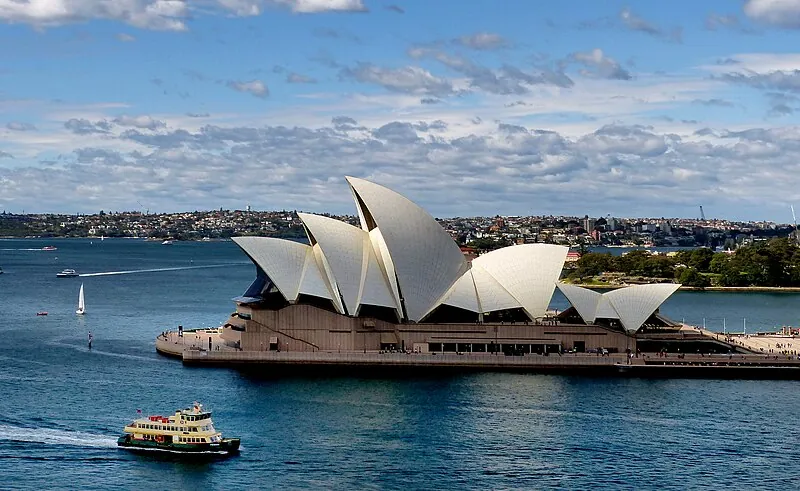
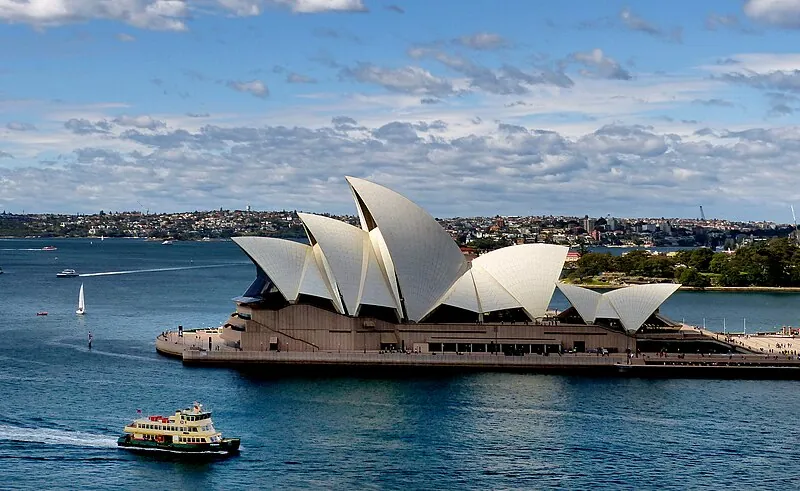
- The Opera House: The UNESCO-listed building is more impressive from inside than from outside. The Concert Hall (capacity 2,679) has the best acoustics of any concert hall in the Southern Hemisphere. Book a performance during your stay; the foyer bars alone are worth the experience before or after a show. Guided architectural tours run daily if no performance is scheduled.
- Bondi Beach: The most famous beach in Australia is 8km southeast of the CBD (accessible by bus from Bondi Junction station). Worth visiting for the surf culture, the Icebergs ocean pool (a tidal seawater pool cut into the rocks at the southern end of the beach), and the coastal walk south to Bronte and Coogee. Not the best beach in Australia by any objective measure, but the urbanised beach culture is compelling.
- The Blue Mountains: Two hours west of Sydney by train, the Greater Blue Mountains (a UNESCO World Heritage Site containing 1 million hectares of eucalyptus forest, sandstone canyons, and the Three Sisters rock formation at Echo Point, Katoomba) is the most dramatic day trip from Sydney. The Scenic Cableway and Skyway at Scenic World provide cable car access above the forested valley.
Melbourne: Culture and Coffee
Melbourne (population 5.1 million) consistently competes with Sydney for the title of Australia's most liveable city and wins the argument among those who prioritise culture, food, and coffee over beaches and harbour views. The city's identity is built around its cafe culture (Melbourne's third-wave coffee scene was formative globally; the flat white originated here, or in Auckland, and Melbourne's Degraves Street and Hardware Lane café laneways are internationally significant), its street art (Hosier Lane, a UNESCO-recognised example of urban street art culture), its international restaurant scene concentrated in Fitzroy, Collingwood, and the CBD, and the AFL (Australian Rules Football), which functions as Melbourne's civic religion from March to September.
The Great Ocean Road (a 243km coastal road from Torquay to Allansford, built 1919 to 1932 by returned World War I soldiers as a memorial) provides access to the Twelve Apostles limestone sea stacks in Port Campbell National Park. The drive from Melbourne along the Great Ocean Road and back via the inland Princes Highway takes 2 to 3 days as a comfortable road trip.
The Great Barrier Reef: Cairns and the Whitsundays
The Great Barrier Reef (2,300km in length, covering 344,400 km², comprising 2,900 individual reefs and 900 islands) is the world's largest coral reef system and the largest structure ever built by living organisms. It is also under significant climate stress: mass bleaching events occurred in 1998, 2002, 2016, 2017, 2020, 2022, and 2024, with warming ocean temperatures causing coral to expel their symbiotic algae and bleach white. Approximately 50% of the reef's shallow-water corals have been lost since 1995. The reef is still extraordinary and worth visiting, but the urgency to see it before further degradation is real.
- Cairns and Port Douglas: The northern reef (outer reef, 60 to 90 minutes by fast catamaran from Cairns) is the most accessible for snorkelling and diving day trips. Agincourt Reef (from Port Douglas, 90 minutes) and Norman Reef (from Cairns) are among the best outer reef day trip destinations for coral quality. Live-aboard dive trips from Cairns provide multiple-day access to the Coral Sea and far northern reefs that day trippers cannot reach.
- The Whitsundays: The 74 Whitsunday Islands in the central Great Barrier Reef are best explored by sailing (bareboat charter: hire a yacht with no crew and sail independently; crewed charters for those without sailing experience). Whitehaven Beach (7km of 98% pure silica sand on Whitsunday Island) is consistently rated among the top five beaches in the world. The Heart Reef (a naturally formed coral formation in the shape of a heart, accessible only by helicopter) is the most photographed site in the Whitsundays.
The Red Centre: Uluru and the MacDonnell Ranges
Uluru (Ayers Rock), a 348m sandstone monolith rising from the flat red desert of the Northern Territory, is the sacred site of the Anangu people, who have lived in the region for at least 10,000 years. Climbing Uluru was closed permanently in October 2019 by Parks Australia following decades of requests from the Anangu community; the site is now experienced through circumnavigation walks (the base walk is 10.6km, 3 to 4 hours), guided cultural tours led by Anangu rangers, and the Field of Light installation by Bruce Munro (50,000 solar-powered stemmed glass spheres arranged across the desert floor at dawn). The rock changes colour dramatically at sunrise and sunset as the sandstone minerals reflect the changing light; viewing platforms and organised sunrise/sunset viewing tours are available from Ayers Rock Resort.
Kata Tjuta (the Olgas, 25km from Uluru): 36 domed rock formations covering a 35km² area, with the Valley of the Winds walk (7.4km, 3 to 4 hours through narrow gorges between the domes) providing the most dramatic close-contact landscape experience in the Red Centre.
Practical Information
- Getting there: Qantas, Singapore Airlines, Emirates, and Cathay Pacific connect Europe, the US, and Asia to Sydney and Melbourne. Travel time from London: 21 to 24 hours (direct QF1 from London to Perth, or via Singapore/Dubai). From the US West Coast to Sydney: 15 to 17 hours direct.
- Getting around: Domestic flights are the only practical way to cover Australia's distances (Sydney to Cairns: 2.5 hours by air; 30+ hours by road). Jetstar and Virgin Australia offer competitive domestic pricing. East Coast rail (the XPT and Tilt Train) connects Sydney to Brisbane and Melbourne at slower but scenic pace.
- Best time: There is no single best time for all of Australia. Northern Australia (Cairns, the Kimberley, Darwin): April to September (dry season, before the monsoon). Southern Australia (Sydney, Melbourne, the Reef): December to February (austral summer, warm and school holiday crowded) or March to May and September to November (shoulder season, best conditions). The Red Centre: April to September (before 35°C+ daytime temperatures make walking impractical).
- Budget: Australia is comparable to northern Europe in cost. Mid-range travel: AUD $150 to $250/day ($100 to $170 USD) including accommodation, food, and local transport. Domestic flights add significantly.
Related: New Zealand: South Island, North Island, and the Lord of the Rings Landscape | Bali: The Island of the Gods