Australia is one of the world's most popular long-haul destinations and one of the most demanding to plan well: the country is roughly the size of the continental United States, and the distances between major highlights are not intuitively obvious from a map. Sydney to Cairns (Great Barrier Reef gateway) is a 3-hour flight; Sydney to Uluru is 3.5 hours. A rushed 2-week itinerary covering Sydney, Melbourne, the Reef, and the Red Centre is technically possible by flying but leaves little time to experience any destination properly. Three weeks is the minimum for a meaningful first visit; 4 to 6 weeks allows the east coast, the Reef, and the Outback at a pace that does justice to all three.
Sydney (3 to 5 Days)
Sydney is Australia's most recognisable city and the entry point for most UK travellers (Qantas, British Airways, Cathay Pacific, and others fly London to Sydney in approximately 22 to 24 hours, often via Dubai, Singapore, or Hong Kong). The city's strengths are its harbour, beaches, food scene, and walkability within neighbourhoods.
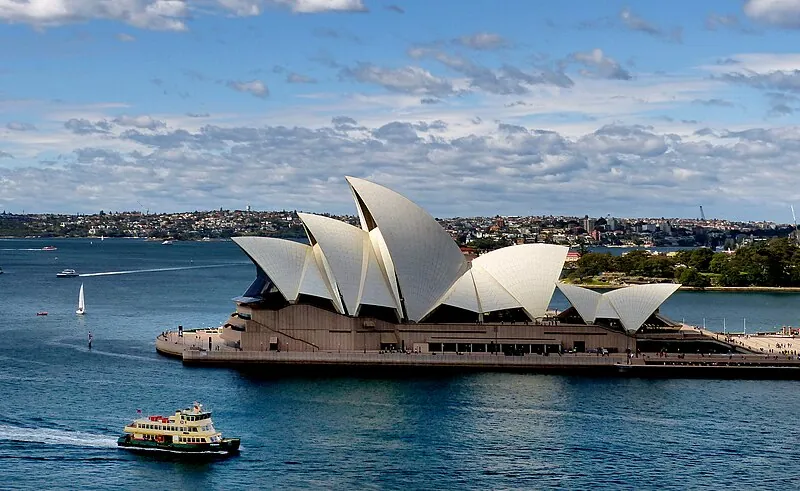
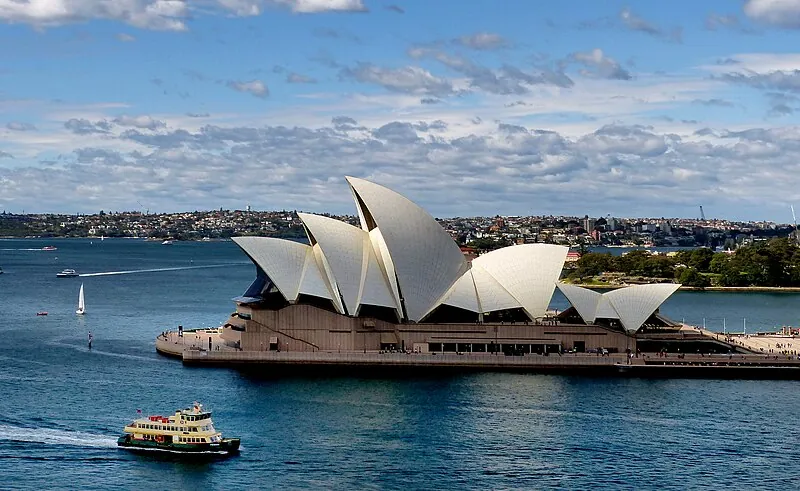
- The Opera House: Jørn Utzon's 1973 masterpiece is best seen from Circular Quay or from the harbour. Free to walk around and photograph; guided tours of the interior cost approximately AUD 43 (£22); attending a performance (Sydney Symphony Orchestra, Opera Australia) is the best way to experience the building properly.
- Harbour Bridge: The BridgeClimb (a guided walk along the arch to the summit, 134 metres above sea level) costs approximately AUD 348 to AUD 493 (£180 to £255) depending on time of day. The Pylon Lookout (the southeast pylon, AUD 20) is a more affordable option with the same view.
- Bondi Beach: Australia's most famous beach, 7 kilometres from the city centre by bus or train (Bondi Junction then bus). The Bondi to Coogee Coastal Walk (6 kilometres one way) passes several additional beaches (Tamarama, Bronte, Clovelly) and is one of the best urban walks in Australia.
- The Blue Mountains: 1.5 hours from Sydney Central by train to Katoomba. The Three Sisters rock formation, bush walking tracks (the Grand Canyon track and the National Pass are both exceptional), and the Scenic World cable car and railway (AUD 42 unlimited rides).
Melbourne (3 to 4 Days)
Melbourne has a strong claim to being Australia's cultural and food capital: the laneway café culture (coffees taken seriously in the city that introduced the flat white to the world), exceptional dining across all price points, and a live music scene disproportionate to the city's size. Melbourne is more about exploration than landmark ticking.
- The lanes: Hosier Lane (street art), Degraves Street (café culture), Centre Place. The lanes and alleys in the CBD form a network of independent food, coffee, and retail that defines Melbourne's character more than any specific attraction.
- The Great Ocean Road: Australia's most scenic coastal drive, accessible as a 2 to 3 day self-drive from Melbourne. The Twelve Apostles limestone stacks (in Apostles Marine National Park, approximately 250 kilometres southwest of Melbourne) are the headline attraction; the drive through the Otway Ranges is equally good.
- Fitzroy and Collingwood: The inner northern suburbs with the highest concentration of independent restaurants, bars, and bookshops. Smith Street and Gertrude Street are the main corridors.
- The National Gallery of Victoria (NGV): Australia's oldest and most-visited art museum, with a strong Asian and decorative arts collection. Free for the permanent collection.
The Great Barrier Reef (Cairns, 2 to 3 Days)
The Great Barrier Reef is the world's largest coral reef system (2,300 kilometres, roughly the length of the Italian coastline) and one of the seven natural wonders of the world. Cairns in Far North Queensland is the primary gateway city. Day trips from Cairns to the outer reef (where coral health is better preserved than near the coast) cost approximately AUD 200 to AUD 280 (£105 to £145) per person for a full day including snorkelling or introductory diving.
Reef health is a legitimate concern: approximately 50% of the reef's coral cover has been lost since the 1990s due to warming sea temperatures causing coral bleaching events (2016, 2017, 2020, 2022, and 2024 were all significant bleaching years). Healthy sections of outer reef (Flynn, Norman, Saxon, Moore reefs) remain spectacular; the experience of diving or snorkelling in warm, clear water surrounded by coral, reef sharks, turtles, and thousands of fish species is genuinely world-class. The reef is not dying uniformly: healthy and bleached sections coexist, and outfitters typically bring guests to the best-condition sites.
Uluru and the Red Centre (2 to 3 Days)
Uluru (formerly Ayers Rock) is a sandstone monolith in the Northern Territory that rises 348 metres above the plain and has a circumference of 9.4 kilometres. It is a sacred site of the Anangu people and has been Anangu-owned since 1985 (jointly managed with the Australian government). Climbing Uluru has been permanently closed since October 2019 in deference to Anangu wishes.
The base walk (10.6 kilometres, approximately 3.5 hours) passes caves with rock art and is the primary way to experience the monolith. Sunrise and sunset viewing from the designated viewing areas, where the rock shifts from ochre to deep purple-red, are the principal photographic experiences. The Valley of the Winds walk in Kata Tjuta (the "Olgas" domed rock formation 50 kilometres west of Uluru) is considered by many visitors to be more dramatically beautiful than Uluru itself.
Practical logistics: fly to Uluru Airport (direct flights from Sydney, Melbourne, and Alice Springs; approximately AUD 300 to AUD 500 return). Accommodation: Ayers Rock Resort is the only accommodation at the site, operated by Voyages Indigenous Tourism Australia, and ranges from camping (AUD 40 per night) to the luxury Longitude 131° camp (AUD 2,000+ per night). Book well in advance, particularly during school holidays.
Related: New Zealand Travel Guide: North and South Island Highlights | East Coast Australia Road Trip: Brisbane to Cairns