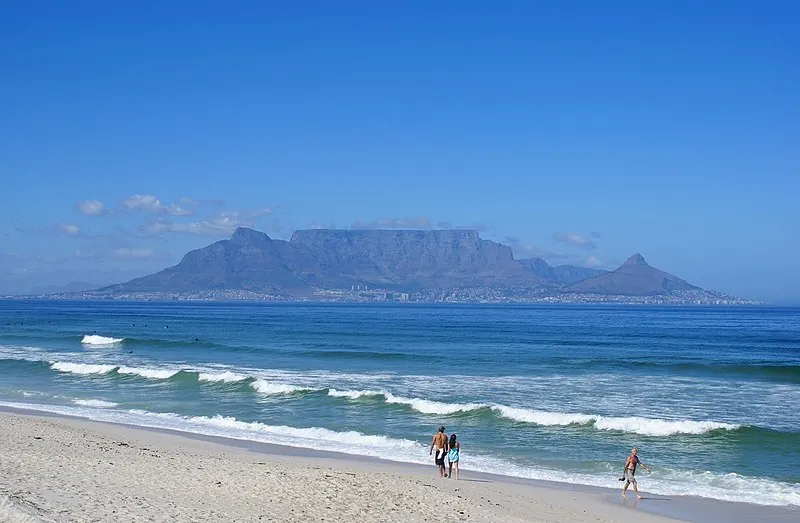
Cape Town occupies a position of almost unfair natural beauty, built at the foot of Table Mountain where two oceans meet and the African continent narrows to its southernmost tip. It is a city of extraordinary contrasts: world-class restaurants and boutique hotels in the CBD and waterfront, historic Cape Malay neighbourhoods on the slopes of Signal Hill, one of the most biodiverse floral kingdoms on earth in the surrounding mountains, and, an hour's drive in any direction, vineyards, whale-watching bays, and the start of the Garden Route. For visitors paying in euros, pounds, or dollars, the South African rand makes Cape Town one of the most compelling value destinations in the world in 2024–25.
Table Mountain
Table Mountain (1,085m) is the visual and emotional centrepiece of Cape Town and should be the first priority on any visit. Two options for reaching the summit exist: the cable car and hiking.
The Cable Car
The Table Mountain Aerial Cableway runs a rotating car that gives 360-degree views during the five-minute ascent. Return tickets cost R420 (approximately $23 at 2025 exchange rates) for adults and should be booked online in advance, especially during school holidays and summer weekends. The cable car operates weather-dependently: Table Mountain generates its own cloud cover (the famous "tablecloth") and closes when visibility drops or winds exceed safe operating limits. Check the official cableway website on the morning of your planned visit.
Hiking
Platteklip Gorge is the most popular hiking route, a clearly marked path up the front face of the mountain that takes 2–3 hours at a reasonable pace. The views back over the City Bowl and the Atlantic coastline are extraordinary. Lion's Head, the smaller peak adjacent to Table Mountain, offers a slightly more adventurous circular hike (2–3 hours) with a chain-assisted section near the summit. The full moon hike up Lion's Head has become one of Cape Town's most beloved informal traditions: check the lunar calendar and expect company on full moon evenings from October through March.
The Cape Peninsula
Cape of Good Hope Nature Reserve
The Cape of Good Hope Nature Reserve at the southern tip of the Cape Peninsula is a 77,000-hectare protected area containing some of the most biodiverse fynbos (a unique South African shrubland) on earth. Entry costs R353 (approximately $19) per person. The reserve is best explored by car: stop at the Cape of Good Hope viewpoint (not the southernmost point of Africa, contrary to popular belief, as that is Cape Agulhas, 150km east), the Cape Point lighthouse, and the Flying Dutchman funicular (R110 return). Baboons are plentiful and surprisingly aggressive; keep windows closed and never feed them.
Boulders Beach
Boulders Beach, near Simon's Town on the False Bay side of the peninsula, is home to a colony of approximately 3,000 African penguins. Entry costs R220 (approximately $12). The penguins waddle to within touching distance but should not be touched or hand-fed. The beach itself is sheltered, warm (by Cape Town standards), and excellent for swimming.
Chapman's Peak Drive
The 9km coastal road between Hout Bay and Noordhoek is one of the most spectacular coastal drives in the world, cut into sheer cliffs above the Atlantic. A toll of R60 applies. The drive is best in the late afternoon when the sun lights the cliffs from the west. It forms the most scenic section of the full Cape Peninsula day loop from Cape Town.
V&A Waterfront and Robben Island
The Victoria and Alfred Waterfront is Cape Town's main tourist hub: a working harbour redeveloped in the 1990s around a complex of restaurants, shops, museums, and hotels. The Two Oceans Aquarium (R260 entry) is one of the best aquariums in Africa and worth a half-day visit. Most importantly, the V&A Waterfront is where the Robben Island ferry departs.
Robben Island, 11km offshore in Table Bay, is most famous as the prison where Nelson Mandela was held for 18 of his 27 years of imprisonment. The ferry and guided island tour together cost R900 per person (approximately $50). Book well in advance through the Robben Island Museum website: tickets sell out weeks ahead during school holidays and summer. Tours are led by former political prisoners, which gives the experience an emotional authority that no guidebook can replicate. The tour lasts approximately 3.5 hours including the ferry crossing.
Cape Town Neighbourhoods
Bo-Kaap is the historic Cape Malay quarter on the slopes of Signal Hill, famous for its vividly painted houses in yellow, pink, turquoise, and orange. The neighbourhood was settled by freed slaves and political exiles brought from Southeast Asia by the Dutch East India Company in the 17th and 18th centuries. The Bo-Kaap Museum (R20) covers this history. The neighbourhood is best experienced by walking the steep cobblestone streets in the early morning before the tour groups arrive.
Woodstock, east of the CBD, is Cape Town's most interesting street art district. The Old Biscuit Mill market on Saturdays is one of the best food markets in South Africa, combining artisan producers, restaurant stalls, and live music. De Waterkant, between the CBD and Green Point, is the city's LGBTQ+ neighbourhood, with good cafés and bars.
The Winelands
The Cape Winelands, beginning 45 minutes east of Cape Town, produce some of the southern hemisphere's finest wines in a landscape of oak-lined streets, whitewashed Cape Dutch farmhouses, and mountains rising behind every valley.
Stellenbosch is the main wine town: an 18th-century university town with a good restaurant scene and over 150 wine estates within easy reach. The R44 between Stellenbosch and Paarl passes some of the most attractive estates. Franschhoek, an hour from Cape Town, is the most scenic wine village in the Cape and has the highest concentration of excellent restaurants relative to its size of any South African town. Haute Cabrière (famous for its Pinot Noir), La Motte, and Grande Provence are among the standout estates. The Franschhoek Wine Tram provides a hop-on hop-off tram route between estates for approximately R260 per person, a sensible option if you plan to taste seriously.
The Garden Route
The Garden Route is a 300km coastal drive from Cape Town (or more precisely from Mossel Bay) east toward Port Elizabeth (Gqeberha), passing through a landscape of temperate forest, lagoons, and rocky coastline. It is one of the most beautiful road trips in Africa and can be done in either direction over four to seven days, depending on how many stops you make.
Knysna is the route's most popular stop, built around a lagoon protected from the sea by two sandstone cliffs called the Heads. The Knysna Heads provide one of the most dramatic views on the coast. The town has excellent restaurants and is a good base for a night or two. Tsitsikamma National Park, east of Knysna, contains ancient Outeniqua yellowwood forest and the Storms River Mouth, where a suspension bridge crosses the gorge above the river. Day entry to Tsitsikamma costs R232. Wilderness, west of Knysna, is a small town of rivers, lakes, and bird-rich wetlands that provides a quieter alternative to the more developed resorts.
Safety in Cape Town
Cape Town requires a level of awareness that most Western cities do not. The central tourist areas, the Winelands, and the Garden Route are generally safe for tourists who take standard precautions. However, several specific risks require attention. Car-jackings occur, primarily in suburban areas at traffic lights after dark: keep windows up and bags out of sight. Do not walk in unfamiliar areas at night. The Cape Flats townships (Khayelitsha, Mitchells Plain) have extremely high crime rates and should not be entered without an organised township tour with a reputable operator. Always book Robben Island and Boulders Beach through the official booking systems rather than from touts near the ferry terminal.
Budget and Best Time to Visit
The South African rand offers exceptional value for travellers holding dollars, euros, or pounds. A comfortable mid-range daily budget in Cape Town runs to approximately $80–120, covering a good hotel or guesthouse, restaurant meals, and attraction admissions. Car hire for the Winelands and Garden Route costs from $30–50 per day for a small car. Book through international aggregators rather than local operators for the most competitive rates.
The best time to visit Cape Town is November through March (Southern Hemisphere summer). The Western Cape is warm and dry, with long days and consistently pleasant temperatures of 25–30°C. The sea on the Atlantic side (Camps Bay, Clifton) is cold year-round (around 14°C) due to the Benguela Current; the False Bay side (Muizenberg, Fish Hoek) is noticeably warmer. The Cape's winter (June–August) brings cold fronts and rain but also the whale season: southern right whales calve in Walker Bay (around Hermanus, 90 minutes from Cape Town) from June to November, and shore-based whale watching here is among the best in the world.
Related: Kenya Safari Guide: Masai Mara, Amboseli, and the Big Five | The Best Honeymoon Destinations: Romance at Every Budget