No cities on Earth encapsulate the speed of human ambition quite like Shanghai and Shenzhen. One was already a world city, paused for decades, then resumed at extraordinary velocity. The other was a fishing village of 30,000 people in 1979 and is now home to over 17 million, headquarters to Huawei, Tencent, and BYD, and the most successful experiment in planned urban development in history. Together, they offer a window into a future that the rest of the world is still catching up to.
Shanghai: Where Old China Meets the World
The Bund and Pudong
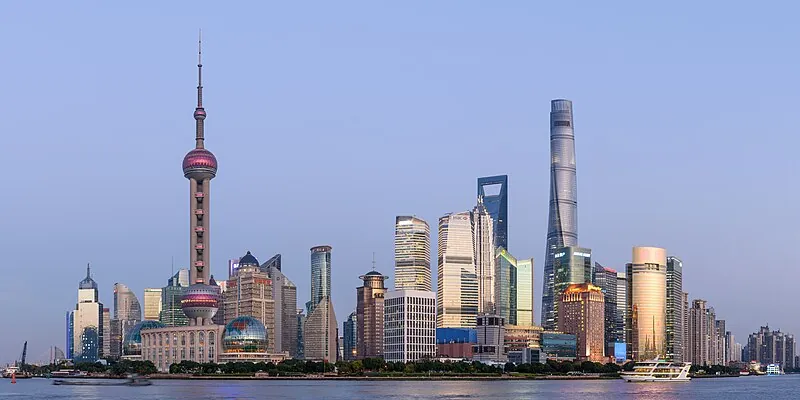
Stand on the Bund — the famous 1.5km waterfront promenade lined with Art Deco, Baroque, and Neo-Classical buildings from Shanghai's 1920s–30s golden era — and look across the Huangpu River. On the other side, the Pudong skyline rises in a cluster of architectural spectacle: the needle of the Oriental Pearl Tower, the trapezoid crown of the Jin Mao Tower, the bottle-opener silhouette of the Shanghai World Financial Center, and dominating them all, the corkscrew twist of the Shanghai Tower — at 632 metres, the second tallest building in the world.
The contrast between the colonial-era stone buildings of the Bund and the sci-fi skyline across the river is one of the world's great urban juxtapositions. Best seen at dusk, when the lights come on over both shores simultaneously.
The French Concession
Shanghai's most liveable and charming neighbourhood. Tree-lined longtang alleyways, café-crammed side streets, boutique hotels in restored 1930s villas, independent bookshops, and some of the city's finest restaurants. The Xintiandi complex of restored shikumen (stone-gate) houses is tourist-polished but genuinely beautiful. For something more authentic, wander the lanes around Wukang Road or Anfu Road.
Yu Garden and the Old City
A 16th-century classical garden near the Bund — intricate rockeries, pavilions, ponds, and zigzag bridges. Crowded but worth it. The surrounding bazaar area is touristy but the adjacent Chenghuang Miao temple provides genuine atmosphere.
Food in Shanghai
Shanghai cuisine (hu cai) is sweeter, richer, and more wine-braised than you might expect. Must-eat: xiaolongbao (soup dumplings) at Din Tai Fung or — more locally — Jia Jia Tang Bao near People's Square. Shengjianbao (pan-fried pork buns with a crackling bottom) are a Shanghai street breakfast staple. The Maoming Road night market and the Wujiang Road Food Street offer an affordable survey of the city's flavours.
Shenzhen: The City That Invented Itself
Why Shenzhen Is Unlike Anywhere Else
In 1980, Deng Xiaoping designated Shenzhen as China's first Special Economic Zone — a controlled experiment in capitalism within a communist state. What followed was the fastest urban growth in recorded human history. Shenzhen is now a megacity of innovation: it has more patents filed annually than most countries, more electric buses than the rest of the world combined, and a skyline that continues to be updated faster than any city's on Earth.
OCT Loft Creative Culture Park
A remarkable transformation of a former industrial zone into an arts and design district — galleries, studios, independent coffee shops, design schools, and weekend markets. The best introduction to Shenzhen's creative side and its young, educated, internationally-minded population.
Huaqiangbei Electronics Market
The largest electronics market on Earth — multiple buildings covering square kilometres, selling everything from individual capacitors to fully assembled smartphones, drones to medical equipment. Even if you buy nothing, walking through Huaqiangbei is a revelation about the depth and scale of China's manufacturing ecosystem. It is also a genuinely interesting urban experience.
Shenzhen Bay and Nanshan
The bayside promenade offers views across to Hong Kong's New Territories. The Nanshan district is home to the tech campuses of Tencent, DJI, and other giants — campus architecture that rivals Silicon Valley's best.
Practical Tips for Both Cities
- VPN: Google, Instagram, WhatsApp, and most Western social media are blocked. Download a reputable VPN before entering China.
- Payment: WeChat Pay and Alipay dominate. Many vendors don't accept cash. Get a Chinese SIM with a local number to set up WeChat Pay, or carry enough cash as backup.
- High-speed rail: Shanghai to Shenzhen takes ~8 hours by HSR (or 3 hours Shenzhen to Guangzhou, then connecting). Far better than flying domestically.
- Best time to visit: Spring (March–May) and Autumn (September–November). Avoid Golden Week (first week of October) and Chinese New Year if you want manageable crowds.
- For families: Shanghai's interactive museums (Science and Technology Museum, Natural History Museum) are world-class. Shenzhen's OCT Shenzhen Bay Science Museum (opening 2025–26) will be extraordinary.
Why These Cities Matter
Visiting Shanghai and Shenzhen is not just tourism — it is a form of education about the world's most consequential economic story of the past 40 years. The speed, the scale, the creativity, and the contradictions of modern China are all visible in these two cities in ways that no documentary or book can fully convey. Come with curiosity, leave with your assumptions rearranged.
Related: Japan for Every Age | China's Ancient Side: Guilin and Zhangjiajie