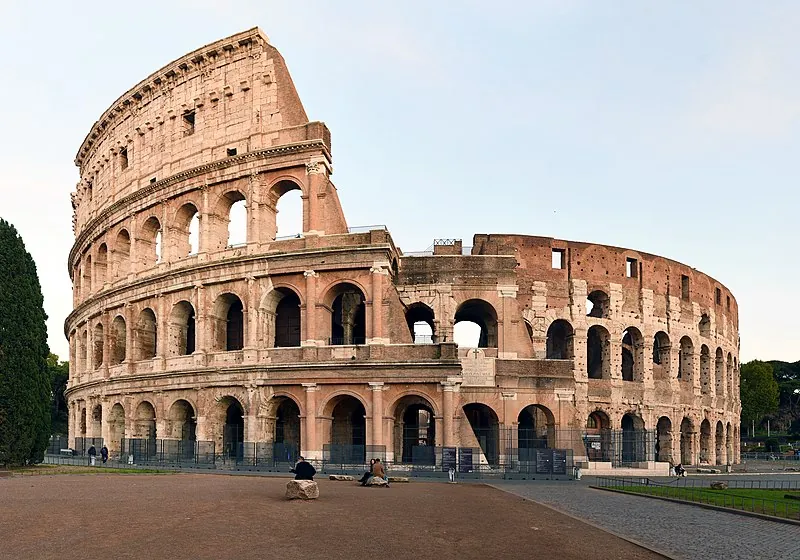
Rome is the most historically layered city on Earth. Stand anywhere in the historic centre and you are simultaneously in a medieval street, a Renaissance neighbourhood, a Baroque architectural set-piece, and on ground that was Roman 2,000 years ago — with the possibility, if you know where to look, of visible remains of all four eras within a 200-metre radius. The challenge is not finding history in Rome but selecting from an abundance so extreme that most visitors default to the same circuit of famous sights, touch them briefly, and leave without engaging the depth that makes Rome unique. Here is a guide to going deeper.
The Roman Layer: Getting Beyond the Surface
The Forum and Palatine: Read Before You Go
The Roman Forum is the most important archaeological site in Western history — the civic, religious, and commercial centre of the Roman Republic and Empire for over a thousand years — and it is experienced by most visitors as a confusing collection of broken columns with inadequate signage. The solution: read Mary Beard's SPQR or Tom Holland's Rubicon before visiting. The Forum becomes completely different once you can stand at the Rostra (the speaker's platform) and visualise Julius Caesar's funeral oration; identify the Temple of Saturn (Rome's treasury, 497 BCE); or understand that the Via Sacra running through the centre was the triumphal route of returning conquering generals.
The Palatine Hill — overlooking the Forum, free with the Forum/Colosseum ticket — is where Rome began (the traditional founding date of 753 BCE is associated with the Palatine) and where the emperors built their palaces. The views from the top over the Forum and toward the Circus Maximus are among Rome's finest — and the Palatine is visited by a fraction of the Colosseum crowd.
The Baths of Caracalla
The Baths of Caracalla (212–216 CE) — the second largest Roman baths in existence, capable of accommodating 1,600 bathers simultaneously — give a better sense of Roman civic architecture's extraordinary ambition than the Colosseum. The scale of the surviving walls (up to 30m high), the complexity of the hypocaust heating system visible in the basement, and the original mosaic floor sections in situ communicate the sophistication of Roman engineering more powerfully than any text. Visited by far fewer tourists than the Colosseum; often nearly empty on weekday mornings.
The Underground: Mithraeum, Domus Aurea, and Beneath San Clemente
Rome's layers are literally vertical. Under the Basilica of San Clemente (Lateran district, 15 minutes from the Colosseum) are three accessible levels: the 12th-century basilica at street level; below it, a 4th-century Christian basilica; and below that, a 2nd-century mithraeum — a cult temple to the mystery god Mithras, with the original altar, frescoes, and the sound of an underground stream that was the mithraeum's ritual feature. The descent through 2,000 years of continuous religious use is one of Rome's most extraordinary experiences.
The Domus Aurea (Nero's Golden House) — a vast palace complex built after the Great Fire of 64 CE, subsequently buried by later emperors' building projects — is partially accessible by guided tour, its frescoed corridors now underground beneath Trajan's Baths on the Oppian Hill. The grotesque paintings that inspired Renaissance artists to develop the decorative style called grottesco (grotesque) are visible.
The Medieval Layer: Forgotten Between Eras
Medieval Rome (500–1400 CE) is the least visited and least understood layer — the period when the city's population collapsed from 1 million to perhaps 20,000, when the Forum was used as a cattle market (Campo Vaccino), and when the Catholic Church built the theological infrastructure of medieval Christendom. The Basilica of Santa Maria Maggiore (one of Rome's four Papal Basilicas, rarely visited by tourists despite being magnificent) has original 5th-century apse mosaics that are among the finest surviving examples of early Christian art. The Case Romane del Celio beneath the Basilica of Saints John and Paul contains a perfectly preserved multi-level Roman townhouse converted to Christian use, with original frescoes.
The Baroque Layer: The Counter-Reformation in Stone
Rome's 17th-century Baroque transformation — driven by the Counter-Reformation Catholic Church's determination to overwhelm Protestant austerity with sensory splendour — produced the fountains, churches, and piazzas that most visitors photograph without always understanding their purpose. The Piazza Navona (built over Domitian's stadium, the original oval visible in its shape) centres on Bernini's Fountain of the Four Rivers (1651), which frames an Egyptian obelisk in a theatrical confection of travertine, water, and mythology. The gesturing figure (representing the River Plate) who shields his eyes is said by Roman tradition to be shielding them from the church of Sant'Agnese in Agone across the piazza — designed by Borromini, Bernini's great rival. The rivalry between the two greatest architects of Baroque Rome was so intense that their alleged insults are encoded in stone.
The Off-Circuit Neighbourhoods
- Testaccio: The working-class neighbourhood built beside Monte Testaccio — an artificial hill of 53 million broken amphorae, accumulated from the ancient Roman port — is Rome's most authentic market neighbourhood and the best area for traditional cucina romana (offal, cacio e pepe, coda alla vaccinara)
- Ostiense/Garbatella: The 1920s Fascist-era planned neighbourhood of extraordinary architectural ambition, the Basilica of San Paolo fuori le Mura (the world's second largest church), and the emerging creative district around Ex-Dogana
- Pigneto: Pier Paolo Pasolini's neighbourhood — the setting for his films and the area where Rome's genuine contemporary social life happens, far from the tourist circuit
Practical Information
- When to visit: October–April for smaller crowds; May–September is peak. The Colosseum in July is extraordinary in its tourist density. Early morning entry (first slot) everywhere gives 30–45 minutes before crowds build.
- Skip-the-line: Essential for the Colosseum, Vatican Museums, and Borghese Gallery (appointment only for Borghese). The Baths of Caracalla, San Clemente, and Domus Aurea require no advance booking and are almost never crowded.
- Getting around: Walking is the only way to experience Rome's layers. The historic centre is compact; a comfortable walk from the Colosseum to the Vatican is 45 minutes through continuous historic fabric.
Related: The Greek Peloponnese: Classical Antiquity Beyond Athens | Venice Beyond the Canals: What Most Tourists Miss