Italy receives approximately 65 million international visitors per year, making it consistently one of the five most visited countries on Earth, and the volume of that tourism creates a genuine challenge: the places that are most worth seeing are also the most crowded, the most expensive, and the most vulnerable to the infrastructure strain that mass tourism produces. The answer is not to avoid Rome or Venice but to understand how to experience them at the right time, at the right scale, and with enough context to see past the surface performance of tourism. Italy rewards preparation more than almost any other destination: the person who has read a page about the Pantheon's engineering before entering it sees a completely different building from the person who has not. This guide provides that context alongside the practical logistics.
Rome: Three Days in the Eternal City
Rome requires at least three full days to cover its essential sites without the exhaustion that comes from trying to compress two millennia of history into 48 hours. The structure that works:
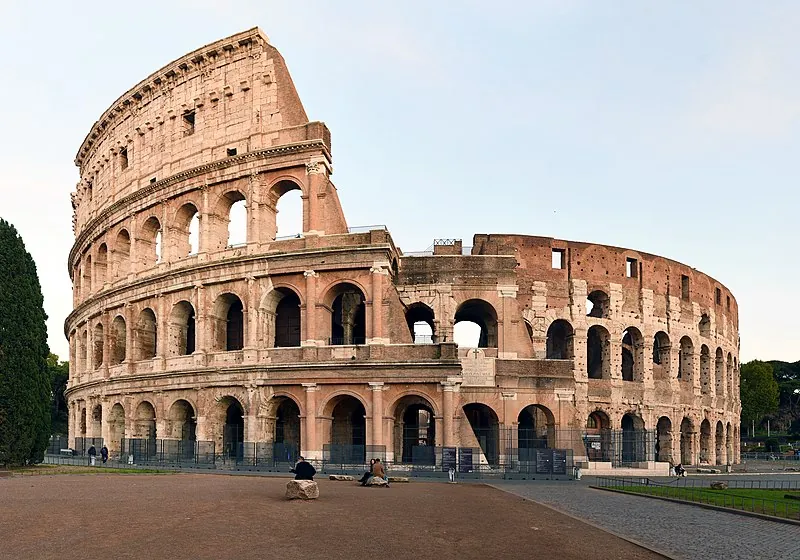
- Day 1: Ancient Rome. The Colosseum (book timed entry online at least 2 weeks ahead; queues for non-pre-booked visitors routinely exceed 2 hours), the Roman Forum and Palatine Hill (included on the same ticket), and the Circus Maximus. The combination reveals the scale of ancient Rome's public entertainment complex in sequence. Evening: Trastevere neighbourhood for dinner.
- Day 2: Vatican. The Vatican Museums, Sistine Chapel, and St Peter's Basilica consume a full day if done properly. Book Vatican Museum entry at least a month ahead for popular dates; the museums contain 54 galleries and the Sistine Chapel is at the end. St Peter's Basilica entry is free but queued; climbing the cupola (320 steps to the top, with an elevator option partway) provides Rome's best elevated view.
- Day 3: Baroque Rome. The Pantheon (free, first-come; arrive at opening at 9am), the Piazza Navona, the Campo de' Fiori market (morning), Caravaggio's paintings in the churches of Santa Maria del Popolo and San Luigi dei Francesi (both free, both extraordinary), and the Trevi Fountain (best at 7am before the crowds).
Roman food: Rome's cuisine is distinctly different from Northern Italian cooking. Cacio e pepe (pasta with Pecorino Romano, black pepper, and pasta water emulsion), carbonara (eggs, guanciale, Pecorino, and black pepper, no cream), and coda alla vaccinara (oxtail braised in tomato and cocoa) are the Roman canon. Da Enzo al 29 in Trastevere and Roscioli near Campo de' Fiori are the most cited addresses for traditional Roman cooking.
Florence: Two Days in the Renaissance Capital
Florence (population 360,000) contains a greater concentration of Renaissance art per square kilometre than any city on Earth. The essential stops:
- The Uffizi Gallery: The world's most important collection of Italian Renaissance painting, including Botticelli's Birth of Venus and Primavera (Room 10-14), Leonardo da Vinci's Annunciation, Caravaggio, Raphael, and Titian. Pre-book; plan 3 to 4 hours minimum.
- The Duomo complex: Brunelleschi's dome (1436, the largest brick dome ever constructed, built without scaffolding using a revolutionary herringbone brickwork technique) dominates the Florence skyline. Climbing it (463 steps, no elevator; book timed entry online) provides the best view of Florence and close inspection of Giorgio Vasari's Last Judgment fresco on the interior of the dome. The adjacent Baptistery doors (Ghiberti's Gates of Paradise, 1425 to 1452) are among the finest works of Renaissance sculpture.
- The Accademia: Primarily visited for Michelangelo's David (1504, 5.17m of Carrara marble, technically extraordinary in its anatomical detail and the tension of the pre-battle moment). The queue without pre-booking is long; book timed entry.
- Oltrarno: The neighbourhood across the Ponte Vecchio (the medieval bridge lined with goldsmiths' shops, the only Florentine bridge spared by the retreating German army in 1944) contains the Boboli Gardens, the Pitti Palace, and the Palazzo Pitti's Palatine Gallery. Less visited than the Uffizi side of the river; the best restaurants in Florence are concentrated here.
Venice: Two Days on the Lagoon
Venice is built on 118 small islands in a lagoon in the Adriatic, connected by 400 bridges across 150 canals, and has no roads in the conventional sense. It is also sinking at approximately 2mm per year while sea levels rise, making visits increasingly complicated during acqua alta (high-water flooding events, most common October to January). The UNESCO has warned since 2021 that Venice risks being placed on the World Heritage Danger list if Italy does not address the tourism impact and flood infrastructure more aggressively. Despite all this, Venice remains overwhelmingly worth visiting.
- St Mark's Basilica: The cathedral of the Venetian Doge, completed in 1092 in a Byzantine style unique in Italy, covered in 8,000 square metres of gold mosaic. The Pala d'Oro (a gold altarpiece studded with 2,000 gemstones) and the original bronze horses (moved inside from the facade; the outdoor horses are replicas) are in the treasury. Arrive at 9am opening; queue is shortest on weekdays in the shoulder season.
- The Doge's Palace (Palazzo Ducale): The political heart of the Venetian Republic, connected to the New Prison by the Bridge of Sighs (Ponte dei Sospiri, so named because prisoners being led to their cells would sigh at their last view of Venice through its stone latticework). The Grand Council chamber contains Tintoretto's Paradise (1594), at 22 by 7 metres the largest oil painting in the world.
- Getting around Venice: Vaporetto (water bus) lines cover the Grand Canal and all major points. Walking is faster for short distances; the city's footprint is small enough that most sights are within 15 to 30 minutes on foot from anywhere in the historic centre.
The Amalfi Coast: Four Days of Dramatic Coastline
The Amalfi Coast (a UNESCO Cultural Landscape since 1997) stretches 50km along the southern edge of the Sorrentine Peninsula, where vertical limestone cliffs drop directly to a turquoise Tyrrhenian Sea and medieval fishing villages cling to the rock face. The SS163 coastal road, cut into the cliff face in 1852, is one of the most dramatic drives in Europe and also one of the most congested in summer. The main towns:
- Positano: The most photographed village on the coast, with pastel-coloured houses tumbling down to a small pebble beach and a pedestrian stairway as its main street. Expensive and crowded in July and August; beautiful and navigable in May/June and September/October.
- Amalfi: The largest town, with its 9th-century cathedral (Cathedral of Saint Andrew, with a bronze door cast in Constantinople in 1066) and the Cloister of Paradise. Amalfi was a maritime republic and one of Italy's most powerful cities in the 11th century; the wealth of that period is visible in the cathedral's construction.
- Ravello: 350m above the sea on a ridge above Amalfi, Ravello's Villa Cimbrone gardens contain the Terrazza dell'Infinito (the Terrace of Infinity, a 13th-century belvedere with life-size marble busts overlooking the coast below) and host the Ravello Festival, an annual classical music series held on a stage with the Mediterranean as its backdrop.
Practical Information
- Getting around: Trenitalia and Italo high-speed trains connect Rome, Florence, and Venice (each leg 1.5 to 2.5 hours). The Amalfi Coast is best accessed from Sorrento (1 hour from Naples by circumvesuviana train) and explored by ferry between towns (avoiding the coastal road congestion in peak season).
- Best time: April to June and September to October. July and August are extremely crowded and hot; Venice and the Amalfi Coast in particular become uncomfortably busy. November to March is quiet (and cold in Rome, foggy in Venice) but dramatically cheaper.
- Book ahead: The Uffizi, the Vatican Museums, the Colosseum, and the Accademia all require timed-entry advance booking, especially from June to September. Missing bookings means standing in queues that can reach 90 minutes for walk-in entry.
Related: Portugal: Lisbon, Porto, and the Algarve | Greece: Athens, Santorini, and the Islands