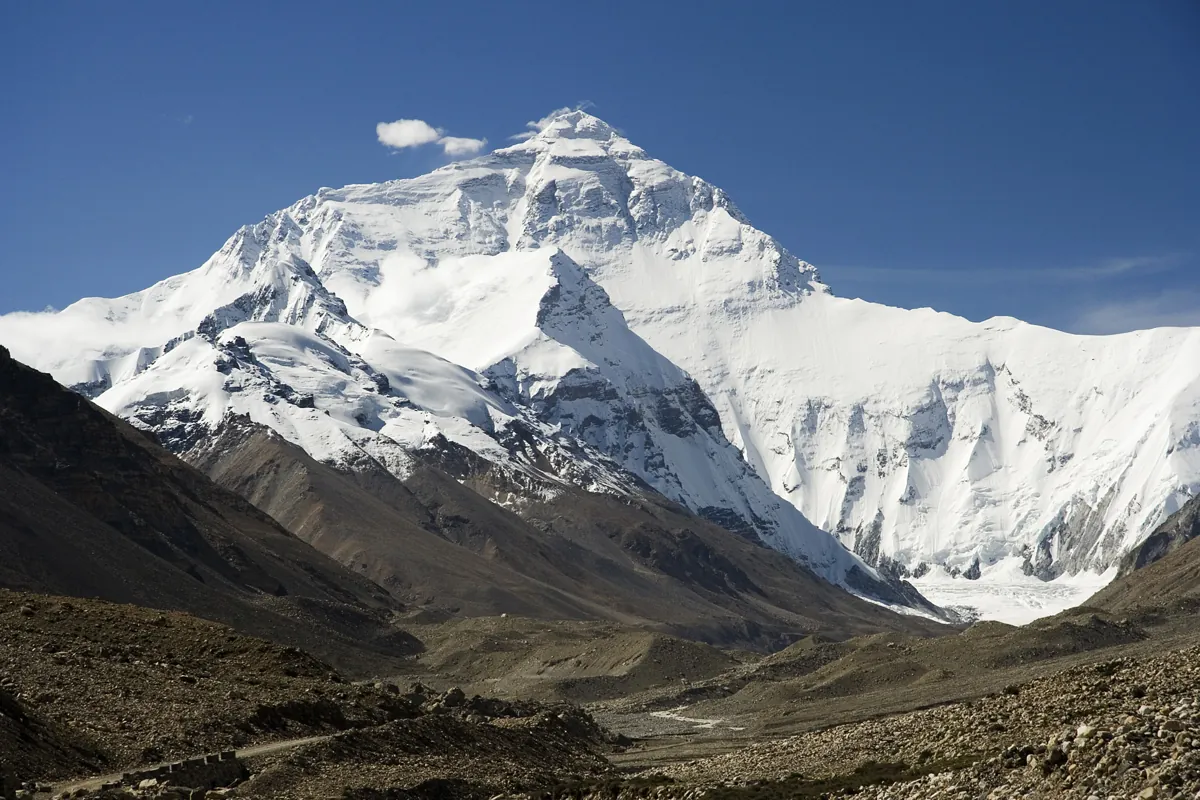
The Everest Base Camp trek is the most famous high-altitude walk in the world and one of the most logistically involved trips available to non-mountaineers. The route covers 130km round trip from Lukla, takes 12 to 14 days for the majority of trekkers, and reaches a maximum elevation of 5,364m at Base Camp (with an optional side trip to Kala Patthar at 5,645m for the better view of Everest's summit). It passes through the Khumbu valley, home to the Sherpa people and the Sagarmatha National Park, a UNESCO World Heritage Site. The trek is not technically difficult: it involves no rock climbing, fixed ropes, or glacier travel. What it requires is time for acclimatisation, a healthy cardiovascular system, and specific preparation for the altitude, the cold, and the isolation of the upper sections. This guide covers the full route, costs, permits, altitude sickness protocols, and the logistics that trip planners most often underestimate.
The Lukla Flight: The Critical First Logistics Problem
The Everest Base Camp trek begins in Lukla, a town in the Solukhumbu district at 2,860m, accessible almost exclusively by a 30-minute flight from Kathmandu. Tenzing-Hillary Airport in Lukla is, by the metrics used to define such things, one of the most technically demanding commercial airports in the world: the runway is 527m long, slopes upward at a 12% gradient, and ends at a mountain wall. Pilots must commit to landing without the option of a go-around once below a certain point. The airport operates only in daylight under visual flight rules, meaning that cloud, fog, or poor visibility causes delays that can cascade across days.
Booking advice: secure Lukla flights directly through a licensed trekking agency or through Tara Air or Summit Air (the two primary operators) as early as possible, ideally three to four months ahead for October and April departures. Budget 48 extra hours in Kathmandu at the start of your trip for potential weather delays. If you miss your return Lukla flight due to weather, the cost of a helicopter transfer back to Kathmandu is $300–500 per person; ensure your travel insurance (with helicopter evacuation cover) is in place before you board the first flight to Nepal.
Helicopter transfers directly from Kathmandu to Lukla or higher points are available ($600–1,200 one-way for a shared helicopter) and eliminate the flight uncertainty at the cost of losing the first day of altitude acclimatisation walking.
The Classic EBC Route: Day by Day
The standard itinerary runs as follows, with elevations that matter for understanding acclimatisation needs:
- Day 1: Fly Kathmandu to Lukla (2,860m). Trek to Phakding (2,610m). 3–4 hours. Note: you descend from Lukla on day one, which is physiologically helpful.
- Day 2: Phakding to Namche Bazaar (3,440m). 5–6 hours. The trail crosses the Dudh Kosi river multiple times on suspension bridges; the final 2 hours are a steep climb to Namche. The first significant altitude gain of the trip.
- Day 3: Acclimatisation day at Namche Bazaar. Do not ascend to sleep higher. A day hike to Everest View Hotel (3,880m) for the first view of Everest (if weather permits) and back down to Namche is the standard recommendation. Namche has ATMs, a bakery, gear shops, and Wi-Fi.
- Day 4: Namche to Tengboche (3,860m). 5–6 hours. Tengboche Monastery (3,867m) is the largest Buddhist monastery in the Khumbu region; the prayer ceremony at dawn is one of the more atmospheric experiences on the trek.
- Day 5: Tengboche to Dingboche (4,410m). 5–6 hours. The vegetation thins significantly above Tengboche; above 4,000m the landscape becomes high-altitude scrub and rock.
- Day 6: Acclimatisation day at Dingboche. Hike to the Nagarjun Hill viewpoint (5,100m) and return. Critical day: do not skip this acclimatisation stop.
- Day 7: Dingboche to Lobuche (4,940m). 5 hours. The trail passes the Thukla Pass memorial, where cairns commemorate climbers who died on Everest and the surrounding peaks.
- Day 8: Lobuche to Gorak Shep (5,140m) and on to Everest Base Camp (5,364m), then back to Gorak Shep to sleep. 7–9 hours total. Base Camp itself is a gravel plain covered with expedition tents during climbing season (April–May); outside season it can be anticlimactic visually. The walk there is the achievement.
- Day 9: Gorak Shep to Kala Patthar (5,645m) at dawn for the clearest views of Everest's south face and summit pyramid, then descent to Pheriche (4,371m). Kala Patthar, not Base Camp, gives the better Everest view.
- Days 10–12: Descent via the same route to Namche and Lukla, with a flight back to Kathmandu.
Altitude Sickness: Understanding the Risk
Acute Mountain Sickness (AMS) affects a significant proportion of EBC trekkers: studies published in journals including Wilderness and Environmental Medicine estimate that 50–75% of trekkers experience mild AMS symptoms at some point above 3,500m. The condition ranges from a nuisance (headache, mild fatigue, disturbed sleep) to a medical emergency (High Altitude Pulmonary Edema, HAPE, or High Altitude Cerebral Edema, HACE), both of which can be fatal within hours without descent and treatment.
The rules that matter:
- Above 3,000m, ascend no more than 300–500m in sleeping altitude per day.
- For every 1,000m of ascent, spend an extra acclimatisation day.
- "Climb high, sleep low": day hikes to higher elevations are beneficial; sleeping at altitude drives acclimatisation more than the walking itself.
- Recognise the warning symptoms: severe headache that does not respond to ibuprofen or paracetamol, loss of coordination (ataxia), confusion, and persistent dry cough (early HAPE sign). Any of these requires immediate descent.
- Never ascend with AMS symptoms that are not improving. The mountain will be there on a future trip; you will not be if you ignore HACE.
Diamox (acetazolamide, 125–250mg twice daily) is widely used as a prophylactic for AMS and is supported by evidence from multiple randomised controlled trials. It requires a prescription in most Western countries; obtain this before travelling. Common side effects include increased urination and tingling in the extremities, both harmless. It is not a substitute for proper acclimatisation schedules but provides an additional safety margin. Do not take it if allergic to sulfa drugs.
Comprehensive travel insurance with helicopter evacuation cover is non-negotiable for this trek. A helicopter evacuation from Base Camp to Kathmandu costs approximately $4,000–6,000; without insurance this becomes an immediate personal liability.
Permits and Costs
The permit structure for EBC changed slightly in 2024. Required documents:
- Nepal visa: $30 for 15 days, $50 for 30 days, obtainable on arrival at Tribhuvan International Airport (Kathmandu) or via the online e-visa portal. Bring a passport photo and USD cash.
- Sagarmatha National Park permit: NPR 3,000 (approximately $22) per person, paid at the park entry gate in Monjo or in advance at the Nepal Tourism Board office in Kathmandu.
- Khumbu Pasang Lhamu Rural Municipality Entry Fee: NPR 2,000 (approximately $15), introduced to fund local conservation.
- TIMS card (Trekkers' Information Management System): $20 for FIT (independent) trekkers, $10 for those booked through a registered agency. Required for identification purposes on the trail.
Total permit costs: approximately $60–90 per person.
Accommodation and food costs on the trail: teahouses (lodge accommodation with shared or private rooms) cost $10–20/night at lower elevations (Namche and below) and $25–45/night above Dingboche, where the altitude, fuel costs, and supply chain make everything more expensive. Meals cost $5–15 per dish; Dal Bhat (lentil soup with rice, the Nepali staple) is the most nutritious and best-value option on the mountain. Wi-Fi is available in most teahouses for a small fee ($1–3); charging devices costs $2–5 per charge above Namche. Budget $20–40/day for food and accommodation combined at lower sections, $40–60/day in the upper Khumbu.
Total trek budget excluding international flights: $1,200–2,000 for most independent trekkers covering 14 days. This includes permits, accommodation, food, Lukla flights (approximately $200–250 round trip), and guide/porter costs.
Guides and Porters
Hiring a guide and porter is not legally mandatory for the EBC trek (unlike for peak climbing permits). It is strongly recommended for safety, navigation, and economic reasons: trekking with a local guide provides access to local knowledge, immediate assistance if altitude sickness develops, and contributes directly to the Sherpa economy. A guide costs $25–35/day; a porter (who carries up to 25kg of luggage, freeing you to walk with only a day pack) costs $15–20/day, plus their accommodation and food. Tips of 10–15% of total guide and porter fees at the end of the trek are expected and important parts of their income.
If you prefer to walk independently, the route is well marked, teahouses are numerous below 5,000m, and the trail is essentially a single corridor: it is very difficult to get genuinely lost. The main risk is having no local support if altitude sickness develops rapidly.
Best Time to Go
Two main trekking seasons exist:
- October to November (post-monsoon): the most popular window. Skies are clear after the summer monsoon, visibility is excellent, and temperatures are cold but manageable (−10°C to −20°C at higher camps at night). The trail is at its busiest in October, particularly around the Namche to Tengboche section.
- March to May (pre-monsoon): warmer, rhododendron forests in bloom below 4,000m, and the mountain is approached by summit expedition teams (adding atmosphere at Base Camp). Cloud builds in the afternoons more than in autumn, but morning views are generally clear. May brings the highest risk of afternoon cloud.
December to February: technically possible but bitterly cold at altitude and many teahouses close above Dingboche. June to September: the monsoon makes the lower trail muddy and views are frequently obscured, though the trail is quieter and leeches are the main low-altitude hazard.
Kathmandu Before and After the Trek
Plan two to three days in Kathmandu at the start of your trip for gear shopping (Thamel is the gear district, with a mix of genuine North Face and counterfeit at one-quarter of the price), permit acquisition, and the essential cultural visits. Pashupatinath Temple on the banks of the Bagmati River is the most important Hindu temple in Nepal and one of the most significant in South Asia; the cremation ghats along the river are visible from a public observation area across the river, approached respectfully. Boudhanath Stupa, 5km east of Thamel, is the largest stupa in South Asia and the centre of Tibetan Buddhist practice in Nepal: the circular kora (circumambulation path) around the stupa at dusk, with monks and pilgrims spinning prayer wheels, is among the more quietly affecting experiences available in Kathmandu.
Related: Galápagos Islands: Wildlife, Costs, and How to Visit Properly | Peru and Machu Picchu: The Complete Trekking Guide