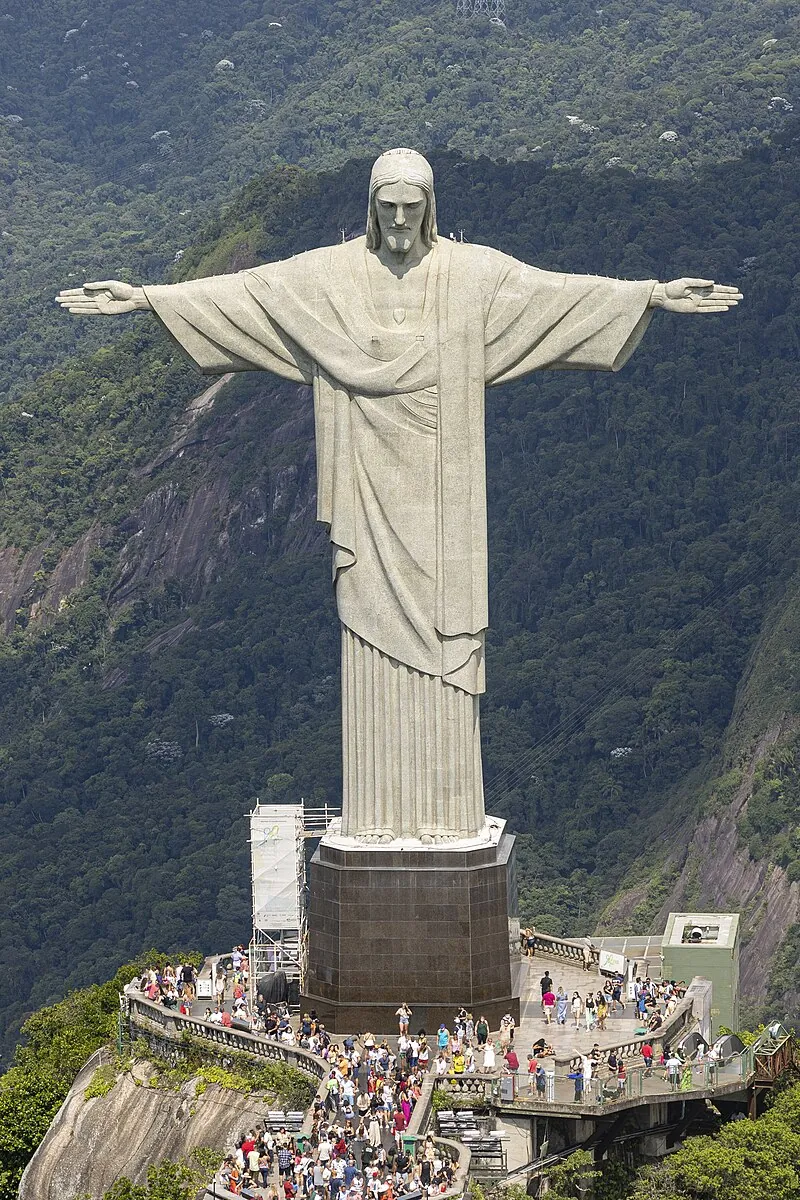
There is a reason why the carioca — a native of Rio de Janeiro — is said to inhabit a different relationship with beauty from most other city-dwellers. The city is surrounded on every side by something visually extraordinary: the Sugarloaf Mountain rising from the harbour mouth, the 710m granite summit of Corcovado in the Tijuca Forest with its outstretched Christ looking over everything, the curve of Copacabana backed by the Serra do Mar, the perfect crescent of Ipanema between two rock headlands, the bromeliad-covered slopes of the Atlantic Forest cascading into the urban fabric. Rio de Janeiro — the Cidade Maravilhosa, the Marvelous City — is not merely beautiful in specific sights; it is beautiful as an integrated geography of mountain, forest, sea, and city that no other urban environment on Earth quite replicates. Understanding Rio requires holding its beauty and its difficulties simultaneously: it is magnificent and genuinely complicated, and the honest visitor engages with both.
The Essential Landscapes
Sugarloaf Mountain (Pão de Açúcar)
The Sugarloaf — the 396m smooth granite monolith at the mouth of Guanabara Bay — is Rio's most recognisable natural landmark. The cable car (bondinho) ascends in two stages: first to the intermediate peak of Morro da Urca (215m), then to the Sugarloaf summit, with views that encompass the entire Rio geography simultaneously: the bay with its islands, Niterói across the water, the beaches of the South Zone, the favelas on the hillsides, and the city spreading north and west through its mountain-framed valleys. Go at sunset: the last cable car allows you to watch the light fall across the bay and the city lights begin to come on below — one of the world's great urban panoramic experiences. Book tickets online to avoid queues.
Christ the Redeemer and Corcovado
The Christ the Redeemer statue (Cristo Redentor) — 38m of reinforced concrete and soapstone, arms outstretched at 28 metres span, atop the 710m Corcovado peak within the Tijuca National Park — was completed in 1931 and voted one of the New Seven Wonders of the World in 2007. The approach matters: the traditional route is the Corcovado train from the Cosme Velho station at the mountain's base, which climbs through dense Atlantic Forest in 20 minutes with views expanding as you ascend. The alternative is a van up the road. The statue itself, at close range, is more powerful than photographs suggest — the scale in relation to the city below, and the 360° view from the platform, are extraordinary. The early morning departure (first train) or late afternoon (last train back) avoids the worst of the midday tourist density.
The Tijuca Forest
Within Rio de Janeiro's urban limits, surrounding Corcovado and the interior mountains, lies the Tijuca National Park — the largest urban forest in the world, at 3,953 hectares. Once cleared for coffee and sugarcane plantations in the 18th century, it was replanted by order of Emperor Pedro II from the 1860s — one of history's first urban environmental restoration projects — and has recovered to a dense Atlantic Forest that harbours toucans, capuchin monkeys, sloths, and endangered species of birds that co-exist within the world's largest southern metropolis. Several trails into the forest begin from within the city itself.
The Beaches
Ipanema and Leblon
Between the granite headlands of Arpoador and Dois Irmãos (Two Brothers), the 2.5km arc of Ipanema beach is the social and cultural heart of Rio's beach life. The beach is divided by informal territorial conventions: different sections are associated with different social groups (gay community at Posto 8 near the Farme de Amoedo junction; families and surfers at other posts). The Sunday street market at Praça General Osório (Hippy Fair) is one of Rio's great social institutions. The bossa nova song that immortalised Ipanema — "The Girl from Ipanema" (Garota de Ipanema, 1962, Tom Jobim and Vinícius de Moraes) was inspired by Heloísa Eneida Menezes Paes Pinto, who walked past the Veloso Bar on Rua Vinícius de Moraes every day on her way to the beach.
Copacabana
The most famous beach in South America — 4km of crescent-shaped shoreline backed by the iconic wave-pattern black and white mosaic promenade (calçadão) designed by Roberto Burle Marx, the curved Art Deco architecture of the Copacabana Palace Hotel (1923), and a relentless, democratic energy that is entirely different from Ipanema's social self-consciousness. Copacabana is older, noisier, more diverse, and arguably more authentically representative of Rio's complexity — millionaires and street vendors, tourists and cariocas, all sharing the same strip of sand under the same sun.
Barra da Tijuca and Beyond
West of Leblon, after the Dois Irmãos tunnel, Barra da Tijuca offers a completely different experience: 18km of beach with less infrastructure than the South Zone beaches but bigger waves, more space, and the outdoor lifestyle feel of a younger, less dense part of the city. Further west: Recreio, Prainha (surfers' refuge), and Grumari (car-free, spectacular) for those seeking the truly uncrowded.
The Neighbourhoods Beyond the Postcard
Santa Teresa
The hillside neighbourhood of Santa Teresa — connected to the city center by the historic bondinho (tram) that crosses the Carioca Aqueduct (Lapa Arches) — is Rio's bohemian hilltop, a maze of winding streets, colonial and modernist houses, studios of artists and musicians, and restaurants with some of the city's most extraordinary views. The neighbourhood survived the era of urban middle-class flight when the wealthier areas migrated to the South Zone, and retains a genuine creative community. The Museu Chácara do Céu (a private collection of Modernist art in a hilltop mansion) and the Parque das Ruínas (the romantic ruins of a 19th-century mansion with a performance space inside) are Santa Teresa's cultural anchors.
Lapa
Below Santa Teresa, the Lapa neighbourhood and its famous arcos (the 18th-century aqueduct repurposed as a tram viaduct) is Rio's late-night music district — the city's samba and choro (traditional instrumental music) scene concentrates here, particularly in the gafieira dance halls and the open-air street scene around the arcos on weekends. Lapa is Rio at its most authentically carioca: loud, warm, chaotic, and musically extraordinary.
Carnival: What It Actually Is
The Rio Carnival — the world's largest, with approximately 2 million people on the streets each day during its peak — is not one event but several simultaneous experiences:
- The Sambódromo: The formal competition of the 12 major escolas de samba (samba schools) — enormous organisations of up to 5,000 participants parading in elaborate floats and costumes, performing original samba compositions, judged in rigorous competition over two consecutive nights. Tickets from $100 to $1,000+. A genuinely extraordinary spectacle if you know the schools and what to look for.
- Blocos: The street carnival — hundreds of neighbourhood parade groups (blocos) playing brass band samba, marchinha, axé, and other Brazilian rhythms through the streets. Free to attend; the atmosphere is extraordinary; some blocos attract 500,000 people.
- Balls: The formal Carnival balls at hotels and clubs — from the family-friendly Teatro Municipal ball to the notoriously extravagant Baile do Copacabana Palace.
Practical Information
- Getting there: Galeão International Airport (GIG) or Santos Dumont for domestic. Uber from airport is the recommended option — regulated taxis work but are more expensive.
- Getting around: Metro covers the main beach strip and connects to the city center; bus network is extensive but confusing; Uber is reliable and affordable throughout the South Zone.
- Safety: Rio requires consistent awareness. Keep valuables off the beach (or use a waterproof bag under you); avoid walking in unfamiliar areas after dark; use Uber rather than hailing taxis on the street. The tourist areas are relatively safe; research any areas beyond the South Zone tourist circuit before visiting.
- Best time: May–September (cooler, drier, 23–28°C). Carnival is February/March and is extraordinary but expensive and crowded. December–February is summer (very hot, humid, frequent afternoon storms).
Related: São Paulo: Latin America's Cultural Capital | Northeast Brazil Beaches