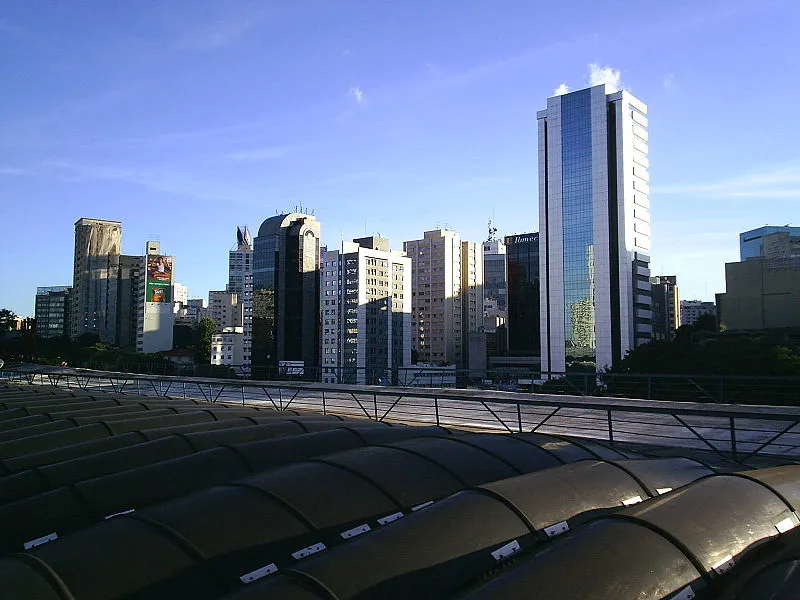
São Paulo does not ask you to love it. It does not have a beach, or a harbour, or a famous landmark by which it is internationally known. It has no Sydney Opera House, no Eiffel Tower, no Colosseum. What it has is something harder to photograph and easier to feel: an energy of sheer urban intensity — the restlessness of a city where 22 million people and over 70 nationalities are constantly in motion, making things, eating extraordinary food, building companies, making music, painting walls, arguing in bars, and generally operating at a pace and scale that makes most other cities seem quiet. São Paulo is the financial capital of South America, the culinary capital of the Southern Hemisphere, and one of the world's great cities for those who know how to engage with it. The first 24 hours are often overwhelming. The second day, it starts to make sense. By the end of a week, many visitors find it extremely difficult to leave.
The Essential Neighbourhoods
Paulista Avenue and Bela Vista
The Avenida Paulista is São Paulo's symbolic spine — a 2.8km boulevard of banks, cultural institutions, restaurants, and the extraordinary MASP (Museu de Arte de São Paulo). The MASP building, designed by Lina Bo Bardi and completed in 1968, is one of the 20th century's great works of architecture: a concrete and glass box suspended by two red concrete frames over an open plaza, housing one of the most important art collections in the Southern Hemisphere — including El Greco, Rembrandt, Manet, Renoir, and an extraordinary collection of Brazilian modernism. On Sundays, the plaza beneath the suspended building hosts an antiques and crafts fair while the avenue itself is closed to traffic and taken over by cyclists, skaters, joggers, and families. The surrounding neighbourhood of Bela Vista (also called "Bixiga") is São Paulo's Italian quarter — the legacy of the massive Italian immigration of the late 19th century — with trattorias, salumerias, and the best pizza in the Southern Hemisphere.
Liberdade
São Paulo has the largest Japanese diaspora population outside Japan — approximately 1.6 million people of Japanese descent in the metropolitan area, representing the largest concentration of Japanese people outside Japan itself. Liberdade, the Japanese quarter south of the historic center, reflects this: the street signs are bilingual, the shops sell Japanese groceries, electronics, and stationery, the restaurants serve ramen, sushi, and kaiseki at every price point, and the Sunday street market (Feira de Liberdade) is a remarkable display of Japanese-Brazilian cultural fusion. São Paulo's Japanese restaurants are, by the consensus of those who know both cities well, comparable to those in Tokyo — the raw fish supply from Brazil's Atlantic coast is excellent, and the culinary standards maintained by São Paulo's Japanese community are extraordinarily high.
Vila Madalena
The bohemian heartland — a hilly neighbourhood of small houses, creative studios, independent bookshops, vinyl record stores, and the concentrated street art scene for which São Paulo has become internationally known. The Beco do Batman (Batman's Alley) is an unmarked side street whose walls are entirely covered in commissioned and free murals, changing constantly as new artists paint over old works — a living gallery with no admission charge and no permanent collection. Vila Madalena's bars fill with São Paulo's creative class from Thursday to Sunday; the neighbourhood's moveable feast of chope (draft beer), petiscos (bar snacks), and live music is some of the most enjoyable urban social life in South America.
Jardins and Itaim Bibi
The wealthy garden district and the adjacent financial quarter of Itaim Bibi are where São Paulo's restaurant scene operates at its most ambitious. A Casa do Porco (Jefferson Rueda's whole-pig restaurant, regularly among the World's 50 Best Restaurants) and Maní (Helena Rizzo's Brazilian contemporary cuisine) both operate in this zone. The neighbourhood grid of quiet tree-lined streets and Modernist apartment buildings has a Buenos Aires quality that surprises visitors who come expecting São Paulo to be relentlessly aggressive — it can be, on Paulista; here it is comparatively calm.
Ibirapuera Park: The City's Lungs
Ibirapuera Park (1954, designed by Oscar Niemeyer) is São Paulo's Central Park — 158 hectares of lake, cycle paths, museums, and green space that on weekends becomes the gathering place of the entire city. The park's cultural infrastructure is remarkable: the Museu de Arte Moderna (MAM), the Museu Afro Brasil, the Fundação Bienal (which hosts the São Paulo Bienal — the second-oldest art biennale in the world, after Venice), and the extraordinary Japanese Pavilion (a traditional Japanese garden within the park, built by the Japanese-Brazilian community in 1954). Early morning in Ibirapuera — joggers, capoeira circles, paddle boats on the lake, coconut vendors — is one of São Paulo's most quietly beautiful experiences.
The Food: Why São Paulo Is Latin America's Culinary Capital
São Paulo's claim to culinary greatness rests on the extraordinary diversity of its immigrant communities (Italian, Japanese, Lebanese, Spanish, Jewish, Korean, Chinese, Portuguese, and dozens more) combined with the economic power to sustain a demanding, sophisticated restaurant culture. The results:
- Pizza: São Paulo's 6,000+ pizzerias produce some of the best pizza in the world — the influence of the massive Italian immigrant population (São Paulo received 3 million Italian immigrants between 1880–1960) created a pizza tradition that developed independently of Italy and in some ways has surpassed it. The São Paulo style: thin, crispy base, abundant toppings, often with local Brazilian additions (catupiry cream cheese is a classic). The Sunday pizza-eating tradition is near-universal across social classes.
- Japanese cuisine: As noted — the Japanese restaurant scene is extraordinary. But the Japanese-Brazilian fusion tradition (temaki with cream cheese and spicy mayo; chirashi with Brazilian fish; the hybrid "temakeria" casual restaurant format) has also produced entirely new culinary forms that don't exist anywhere else.
- Contemporary Brazilian: Chef Alex Atala's DOM restaurant (and his more recent Dalva e Dito and Bio) used ingredients from the Amazon and Brazilian biodiversity to create a cuisine that placed São Paulo on the international gastronomic map. The generation of Brazilian chefs who followed have built on this foundation with an ambition and creativity that makes São Paulo's fine dining scene genuinely world-class.
- Street food and markets: The Mercado Municipal (Mercadão) is São Paulo's extraordinary central market — a 1933 neo-Gothic building housing stalls selling everything from bacalhau (salt cod) to Japanese yuzu, and famous for the mortadella sandwich (thick-sliced mortadella in a fresh bread roll) that is São Paulo's most iconic and democratic street food.
Practical Information
- Getting there: Guarulhos International Airport (GRU) has direct connections to most major global hubs; Congonhas Airport (CGH) serves domestic routes. The metro connects airports to the city center.
- Getting around: Metro (fast, clean, limited but expanding coverage), Uber/99 (reliable), taxi. Traffic congestion is severe during peak hours — the metro is always the better choice for cross-city movement during the day.
- Safety: São Paulo has real crime as any megacity does. Stay aware of your surroundings, don't display expensive items, and research neighborhoods before visiting. The tourist areas are generally safe during daylight; use taxis or apps after dark in unfamiliar areas.
- Best time: Year-round. São Paulo's altitude (760m) moderates the tropical latitude — temperatures of 20–28°C year-round, with summer (December–March) being wetter and winter (June–August) drier and cooler (10–15°C at night). The São Paulo Bienal occurs in even-numbered years (September–December).
Related: Rio de Janeiro: The Marvelous City | South America's Most Beautiful Beaches