Thailand received 39.8 million international visitors in 2019, a number that makes it consistently one of the top 10 most visited countries in the world. The country's appeal is straightforward: extraordinary Buddhist temple culture, the finest street food in Southeast Asia, tropical islands ranging from party-oriented to genuinely remote, elephant sanctuaries in the northern highlands, and a hospitality tradition genuinely rooted in the cultural concept of "sanuk" (the pursuit of joy and fun in all activity). The challenges are equally consistent: extreme heat from March to May, monsoon flooding from June to October in some regions, and tourist infrastructure that has been stretched by the sheer volume of arrivals at iconic sites. Thailand repays planning that accounts for which region's seasons and which sites are genuinely worth the crowds.
Bangkok: Three Days in the City of Angels
Bangkok (population 11 million in the city proper; 17 million in the metropolitan area) is consistently ranked among the world's most visited cities and most liveable by those who choose to stay. It is simultaneously a city of extraordinary Buddhist temples, a street food culture with more Michelin-recognised restaurants than any other city in Asia (139 Michelin Bib Gourmand addresses in the 2024 Bangkok guide), a 24-hour commercial infrastructure, and some of the world's most creative cocktail bars and independent coffee shops. The temple circuit:
- Wat Phra Kaew and the Grand Palace: The Temple of the Emerald Buddha, within the Grand Palace complex (£16 entrance, one of the most visited sites in Asia), houses the most sacred Buddha image in Thailand: a 66cm jadeite statue that the Thai king personally changes the gold garments of three times per year. The Grand Palace buildings (built from 1782) show an extraordinary fusion of Thai, Chinese, and European architectural elements. Full-length clothing is required; sarong hire available at the entrance if you arrive in shorts.
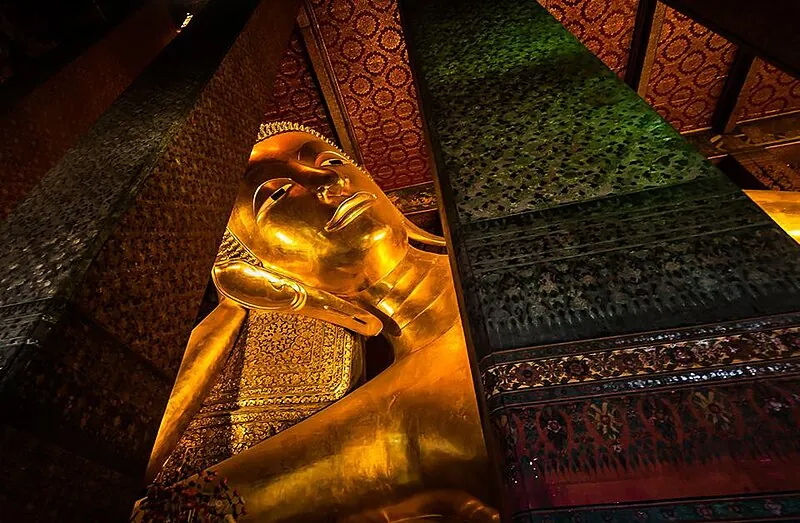
- Wat Pho: Directly south of the Grand Palace, containing the Reclining Buddha (46m long, 15m high, covered in gold leaf) and the school of traditional Thai massage. A 30-minute massage in the temple grounds (approximately £8 to £12) is a reasonable introduction; longer sessions from £15 to £25.
- Wat Arun (Temple of Dawn): On the west bank of the Chao Phraya River, this distinctive prang (Khmer-style tower) is encrusted with fragments of Chinese porcelain creating a mosaic surface that glitters in sunlight. The view from the opposite bank at dawn and sunset is more striking than the view from inside the complex.
- Street food and markets: Or Tor Kor Market (Chatuchak; a covered fresh market selling the finest produce in Bangkok alongside prepared food stalls), Yaowarat Road in Chinatown (the best street seafood in the city, operational from approximately 6pm), and the roving vendors around Victory Monument (pad thai, grilled meats, boat noodles).
Chiang Mai: The Cultural Capital of the North
Chiang Mai (population 1.2 million; altitude 300m) sits in a valley in northern Thailand surrounded by mountains, with a different culture, dialect, cuisine, and climate from Bangkok. The walled old city contains over 300 temples built during the Lanna Kingdom period (13th to 18th century); Doi Suthep (a temple on a mountain 15km outside the city, accessible by songthaew minibus or a 3,500-step staircase) provides the best elevated view of the valley.
Chiang Mai is also the hub for ethical elephant experiences. The Elephant Nature Park (founded by Lek Chailert in the 1990s) is the most internationally recognised rescue and rehabilitation centre, rescuing elephants from logging and entertainment industries. Day visits (approximately £70 to £90 per person) allow interaction with the elephants in a no-riding, no-performing environment. The Elephant Nature Park model has been widely replicated; verify that any elephant sanctuary you visit does not offer riding, chains, or performing elephants, which indicate poor welfare standards regardless of marketing claims.
The Thai Islands: Choosing the Right One
The choice of island depends on which coast (Gulf of Thailand east coast versus Andaman west coast), the time of year (their monsoon seasons are offset), and the travel style required:
Gulf of Thailand Islands (Koh Samui, Koh Phangan, Koh Tao)
- Koh Samui: The largest and most developed Gulf island; full-service tourism with international airports, luxury resorts, and family infrastructure. Best beaches: Chaweng (busiest, most facilities), Lamai (slightly quieter), and the north coast beaches (Bo Phut, Mae Nam, less crowded). Best avoided: July to October (monsoon; rough seas).
- Koh Phangan: Famous for the Full Moon Party (Hat Rin Beach, one night per month; 10,000 to 30,000 attendees; one of the world's largest beach parties). Away from Hat Rin, the island is significantly quieter with good snorkelling and a yoga/wellness retreat community concentrated in the north. Best season: December to April.
- Koh Tao: The best diving island in Thailand; the sheltered bays around the island and the underwater landscape (including Japanese Gardens and Chumphon Pinnacle) have made it one of the world's top five dive training destinations by volume. PADI Open Water certification here costs approximately £250 to £350, the lowest rate for quality instruction in Southeast Asia.
Andaman Islands (Krabi, Koh Lanta, Koh Phi Phi, Phuket)
- Koh Lanta: The quietest of the major Andaman islands, with a predominantly long-stay visitor base (one and two-week stays), good snorkelling reefs in the Mu Koh Lanta Marine National Park, and a more relaxed, family-friendly atmosphere than Phuket or Koh Phi Phi. Best season: November to April.
- Koh Phi Phi: Made famous by The Beach (2000 film) and now struggling with the consequences of that fame; Maya Bay, the filming location, was closed by the Thai government from 2018 to 2022 to allow coral reef recovery. Reopened with visitor number limits. The island village (Tonsai) is one of the most crowded tourist concentrations in Southeast Asia during high season; the surrounding sea is among the most beautiful in the Andaman.
- Phuket: The largest Thai island and the most tourist-developed. Patong Beach is the notorious party strip; Surin, Kamala, and Bang Tao are the more relaxed beach alternatives. Phuket Old Town has a well-preserved Sino-Portuguese architecture district with good independent restaurants and coffee shops. Best season: November to April (Andaman west coast monsoon runs May to October).
Practical Information
- Visa: UK citizens receive a 60-day visa exemption on arrival (extended to 60 days in 2024, previously 30 days). Extensions available at immigration offices.
- Getting around: Domestic flights connect Bangkok to Chiang Mai (1 hour, approximately £30 to £60 on Thai Air Asia or Nok Air), Phuket, Koh Samui, and Krabi. Inter-island transport by ferry and speedboat. Tuk-tuks and songthaews within cities and resorts.
- Best time: November to February for the whole country (cool season; low humidity; both coasts stable). March to May are extremely hot (35 to 40°C). June to October: the Andaman coast is in monsoon; the Gulf coast is at its best from July to September.
- Budget: Thailand is excellent value. Mid-range accommodation: £30 to £80 per night. Street food meals: £1 to £4. Restaurant meals: £8 to £20. Total comfortable mid-range budget: £60 to £100 per person per day including accommodation, food, and local transport.
Related: Bali Travel Guide: Temples, Rice Fields, and Where to Stay | Vietnam Travel Guide: Hanoi, Hoi An, and Ho Chi Minh City