Thailand receives approximately 40 million international visitors in normal years — the most visited country in Southeast Asia by a significant margin. This is not an accident of geography or marketing. Thailand has the most developed tourism infrastructure in the region, the most diverse range of experiences within a single country (ancient capitals and ultramodern cities, tropical islands and mountain hill tribes, spiritual temples and comprehensive nightlife), a food culture of extraordinary quality and accessibility at every price point, and a genuine hospitality culture — the wai greeting, the reflexive warmth, the consistent effort to make visitors feel welcome — that most travellers find memorable and real. It is also a country that rewards preparation: knowing which island to choose, what to avoid in Bangkok, where the genuine elephant experiences are versus the exploitative ones, and how to move between regions efficiently. This guide covers what first-time visitors most need to know, honestly.
Bangkok: The City That Overwhelms and Then Seduces
Bangkok's first impression is rarely positive — the traffic, the heat, the scale, the sensory overload of Sukhumvit Road at rush hour. Its second impression, when you find the right temples, the right food, the right neighbourhood, is often the trip's highlight. The essential Bangkok:
The Temples: Bangkok's Cultural Core
- Wat Phra Kaew and the Grand Palace: The Temple of the Emerald Buddha, within the walled compound of the Grand Palace, is the most sacred site in Thailand — the Emerald Buddha (actually jade, 66cm tall) has been in continuous royal veneration since the 18th century. The complex is enormous, ornate, and genuinely impressive. Dress respectfully (shoulders and knees covered — sarong hire available at the entrance). Arrive before 9am to beat the groups.
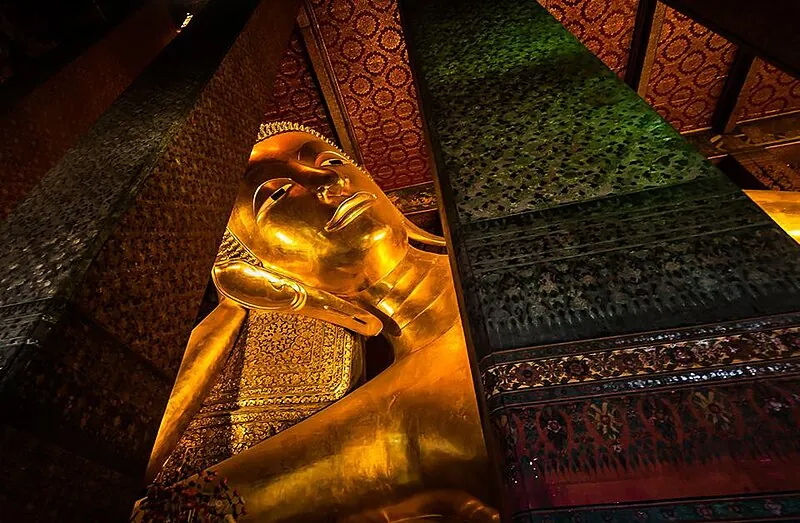
- Wat Pho: Immediately south of the Grand Palace — the largest reclining Buddha in Bangkok (46m long, covered in gold leaf), surrounded by one of the country's most important temples complexes. Also the "birthplace of Thai massage" — the Wat Pho Traditional Medical School has been training massage practitioners for centuries and operates a massage hall on-site.
- Wat Arun (Temple of Dawn): Across the river from Wat Pho, accessible by a 3-baht cross-river ferry — the 82m tower covered in fragments of Chinese porcelain and coloured glass, spectacular at sunset when the light catches the mosaic. The climb up the steep central tower (possible, though vertiginous) provides the best view of the river and Bangkok's skyline.
Food: Bangkok's Greatest Strength
Bangkok's street food and restaurant scene is genuinely world-class and accessible at extraordinary value — some of the world's best Thai cooking is eaten on plastic stools beside a street cart for under $2.
- Pad Thai: The quintessential Thai dish — rice noodles stir-fried with egg, tofu or shrimp, bean sprouts, and peanuts — is a mid-20th-century nationalist invention (promoted by the government of Plaek Phibunsongkhram in 1938–1944 as a unified national dish). The best versions use wok hei (the smoky breath of the wok), fresh lime, and correct noodle texture. Thip Samai on Dinso Road is the legendary Bangkok address.
- Tom Yum Goong: The hot and sour prawn soup — galangal, lemongrass, kaffir lime leaves, chilli, and nam prik pao (roasted chilli paste) in a clear or creamy broth. One of Thailand's signature dishes and one of the most complex soups in Southeast Asian cooking.
- Chinatown (Yaowarat): Bangkok's Chinatown is among the best in Southeast Asia for food — the street food stalls at night (Yaowarat Road, after 6pm) offer roast duck, seafood, dim sum, and Thai-Chinese hybrid cooking at exceptional quality and reasonable price.
- Chatuchak Weekend Market: The largest weekend market in the world — 15,000 stalls selling everything from Thai antiques to live animals to excellent street food. Saturday and Sunday; arrive early (before 10am) before the heat becomes prohibitive.
Chiang Mai: Northern Thailand's Cultural Capital
Eight hours north of Bangkok by overnight train (or 1 hour by air), Chiang Mai — the former capital of the Lanna Kingdom — is a city of 300+ temples, a well-preserved walled old city, a thriving artisan and handicraft scene, excellent food, and the starting point for trekking into the hill tribe areas of northern Thailand. The pace is dramatically slower than Bangkok; the air is cooler (particularly November–February); the culture is more consciously traditional.
Key experiences in Chiang Mai:
- Doi Inthanon National Park: Thailand's highest peak (2,565m) an hour south of the city — home to hill tribe villages, dramatic cloud forest, and the Wachirathan Waterfall. The royal pagodas at the summit (Naphamethanidon and Naphaphonphumisiri) are set in manicured gardens at altitude with views across the Mae Klang Valley.
- Elephant sanctuaries: Chiang Mai province has the highest concentration of ethical elephant sanctuaries in Thailand — places where former logging and tourism elephants live in protected conditions and visitors can observe, feed, and walk with them without riding. The difference between ethical and exploitative elephant tourism is significant; research before booking. Elephant Nature Park (founded by "Lek" Chailert) is the most reputable.
- Cooking classes: Chiang Mai's cooking school industry is one of the best in Thailand — half-day classes typically include a market visit, a lesson covering 4–6 dishes, and a recipe card to take home. Thai cooking skills learned here translate well at home.
The Islands: Choosing the Right One
Thailand's islands divide into two coasts — Gulf of Thailand (east coast: Koh Samui, Koh Phangan, Koh Tao) and Andaman Sea (west coast: Phuket, Krabi, Koh Lanta, Koh Phi Phi). The two coasts have different monsoon seasons, meaning the right island depends on when you travel:
- November–April: Andaman coast is best (dry season, calm seas, excellent visibility for diving). Gulf of Thailand is also good.
- May–October: Gulf of Thailand east coast is better (the Andaman gets its southwest monsoon, with rough seas and some closures). Koh Tao particularly remains reliably accessible.
The islands themselves:
- Koh Phi Phi: The most visually dramatic — limestone cliffs rising from turquoise water, the famous Maya Bay (where The Beach was filmed). Extremely crowded in peak season; Maya Bay has been periodically closed for reef recovery. Worth seeing for the landscape; challenging to enjoy if you dislike crowds.
- Koh Tao: Thailand's diving capital — the cheapest open-water PADI certification in the world ($250–$350 including materials and dives), genuinely excellent dive sites, and a laid-back atmosphere. The coral health is better than most of the more developed islands.
- Koh Lanta: The low-key alternative to the Andaman's main destinations — long beaches, good diving, no Full Moon parties, predominantly families and couples over 25. Excellent long-stay destination.
Practical Information
- Getting there: Suvarnabhumi Airport (BKK) is the main international hub; Don Mueang (DMK) handles budget airlines. Direct flights from Europe (10–12 hours), Australia (9 hours), and all Asian hubs.
- Getting around: Overnight trains and buses between Bangkok, Chiang Mai, and southern beach areas are comfortable and economical. Budget airlines (AirAsia, Nok Air) connect Bangkok to all major island airports for $20–$60 one way. Tuk-tuks within cities; songthaew (shared pick-up trucks) on islands.
- Budget: Thailand is one of the world's best-value destinations. Budget travellers: $30–$50/day. Mid-range (comfortable hotel, restaurant meals): $80–$150/day. Luxury resorts add $150–$500+/night.
- Best time overall: November–February (cool and dry throughout the country). Avoid April (hottest month, Songkran water festival is fun but chaotic) and August–October (peak of Gulf of Thailand season's southwest monsoon).
Related: Bali: The Island of the Gods | Vietnam: A Country Revealed From North to South