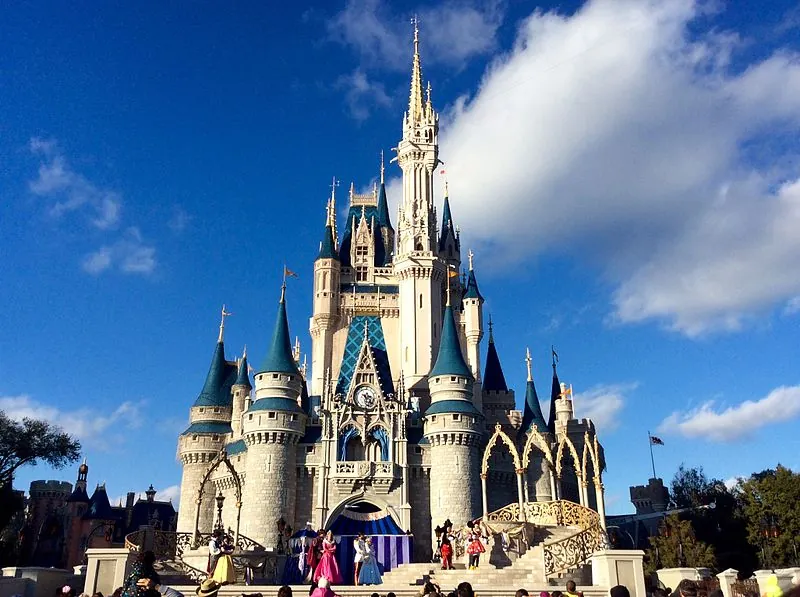
Walt Disney World Resort in Orlando, Florida covers 110 square kilometres (roughly twice the size of Manhattan) and hosts around 58 million visitors per year across its four theme parks, two water parks, a Disney Springs shopping district, and dozens of hotels. For first-time visitors, the sheer scale is both the appeal and the challenge. A week here, planned well, delivers a genuinely extraordinary experience. A week here, planned poorly, means queuing in the Florida heat for hours while spending twice what you intended. This guide covers everything you need to make the most of the parks, from ticket strategy to the quietest weeks of the year.
The Four Parks: What Each One Offers
Magic Kingdom
Magic Kingdom is the original Walt Disney World park, opened on October 1, 1971, and still the most visited theme park on Earth with roughly 17 million guests per year. Cinderella Castle anchors the park's centre, and the surrounding lands (Fantasyland, Tomorrowland, Adventureland, Frontierland, Liberty Square) each have a distinct identity and atmosphere. The flagship rides include Space Mountain (indoor roller coaster, opened 1975), the Haunted Mansion (dark ride, a classic since 1971), Splash Mountain's replacement Tiana's Bayou Adventure (opened 2024), and the Seven Dwarfs Mine Train, which consistently has the longest queue in any Disney park. Expect 60–90 minute waits for Mine Train on busy days without Lightning Lane.
EPCOT
EPCOT opened in 1982 and went through a major overhaul beginning in 2019. The park now divides into four neighbourhoods: World Discovery, World Nature, World Celebration, and the beloved World Showcase, a ring of 11 country pavilions around World Showcase Lagoon where each pavilion offers food, drink, retail, and cultural experiences from that nation. World Showcase is one of Disney's great underrated pleasures: a bowl of ramen in Japan, a cold Kronenbourg in France, and a pasteis de nata in Portugal, all within a 30-minute walk of each other. The headline thrill ride is Guardians of the Galaxy: Cosmic Rewind (2022), a reverse-launch indoor coaster that is among the best rides on property. EPCOT also hosts the popular Food and Wine Festival each autumn (August to November).
Hollywood Studios
Hollywood Studios houses Disney's two most ambitious lands. Star Wars: Galaxy's Edge (opened 2019) is a fully immersive 5.6-hectare environment set in the planet Batuu. Its centrepiece, Rise of the Resistance, is arguably the most technically ambitious theme park attraction ever built: a 17-minute experience combining multiple ride systems, Audio-Animatronic figures at a scale never seen before, and a story that puts guests at the centre of a Star Wars battle. Millennium Falcon: Smugglers Run puts six guests in control of the famous ship. The Tower of Terror (a freefall dark ride themed as a haunted hotel) and Mickey and Minnie's Runaway Railway complete the must-do list. Hollywood Studios tends to draw younger adults and families with older children.
Animal Kingdom
Animal Kingdom opened in 1998 and combines a genuine zoological collection with theme park experiences. Pandora: The World of Avatar (opened 2017) houses Avatar Flight of Passage, consistently voted the best theme park ride in the world in enthusiast polls: a simulated ride on a banshee over the bioluminescent landscape of Pandora. The queue for it without Lightning Lane regularly hits 120–180 minutes. Kilimanjaro Safaris is a 20-minute open vehicle ride through a 175-hectare savannah habitat with real giraffes, elephants, lions, and rhinos. Animal Kingdom's animal collection includes over 5,000 individual animals across 300 species. Expedition Everest, a large roller coaster through a Himalayan-themed mountain, is the park's other major thrill ride.
Ticket Prices (2024–2025)
Disney uses date-based variable pricing, so the cost of a one-day ticket depends heavily on when you visit.
- One-day ticket: from $109 (value dates, typically early January and September) to $189 (peak dates, holidays and spring break). The average for a typical family visit is around $130–149 per person per day.
- Park Hopper add-on: $65 per day extra (allows visiting multiple parks in one day; park hopping opens at 14:00). For a week-long trip, this adds up quickly and is worth buying only if you plan to actively use it, particularly for evening shows at Magic Kingdom or EPCOT.
- Multi-day tickets: The per-day cost drops with more days. A 7-day base ticket averages around $78–89 per day, making a week-long trip around $550–625 per person for tickets alone before any add-ons.
Annual Passes start at $399 (Florida residents only, Pixie Dust Pass) and go up to $1,399 for the Incredi-Pass (all guests, all dates). If you're visiting for 10 or more days per year, an annual pass can save significant money.
Lightning Lane: The Queue System Explained
Disney replaced its legacy FastPass system with Lightning Lane in 2021. There are two separate paid systems:
- Lightning Lane Multi Pass (LLMP): Costs $15–35 per person per day depending on the date. Works like the old MaxPass: you book a return window for one attraction at a time, ride it, then book another. Covers most attractions except the highest-demand rides.
- Lightning Lane Single Pass (LLSP): Costs $7–30 per person per individual attraction. Used for the top-tier rides excluded from LLMP: Flight of Passage, Rise of the Resistance, Guardians of the Galaxy: Cosmic Rewind, Tiana's Bayou Adventure, and a few others. These are purchased separately and often sell out by 09:00 on busy days.
For a family of four visiting during a moderately busy week, budgeting $60–120 per day for Lightning Lane products across both systems is realistic if you want to minimise waiting. A strategy of arriving at park open (a "rope drop") to ride the top attraction standby first, then using Lightning Lane for secondary priorities, is the most cost-effective approach.
When to Visit: The Quiet Weeks
Disney World has peak and value periods that differ significantly in crowd levels and price. The quietest weeks of the year are typically:
- Late January (after Martin Luther King Day weekend, before Presidents' Day)
- First two weeks of September (after Labor Day, before fall break season)
- First two weeks of December (before Christmas week, which is extremely busy)
The busiest periods are: mid-March through April (spring break, which can last 6 weeks with different states staggering their breaks), summer (mid-June to mid-August), Thanksgiving week, and the Christmas–New Year period (December 23 to January 1, when the park reaches capacity daily).
The most underrated time to visit is early to mid-September: Florida's humidity has begun to ease, crowds are at annual lows, and ticket prices are at their minimum. The trade-off is that Hurricane Season runs through October, though a hurricane actually making landfall at Orlando is rare.
On-Site vs Off-Site Hotels
Disney operates over 30 hotels on its property, ranging from Value Resorts (Pop Century, Art of Animation: from $120–200 per night) to Deluxe Resorts (Grand Floridian, Contemporary, Polynesian: $500–1,200 per night). On-site benefits include free Disney transportation (bus, Skyliner gondola, monorail, and boat), Early Theme Park Entry (30 minutes before official opening, which is very useful for beating queues to top rides), and a degree of immersion.
Off-site hotels on International Drive or US-192 can be substantially cheaper: $60–120 per night for a comfortable hotel with a pool. The trade-offs are a reliance on a rental car or rideshare and the loss of Early Entry, which is worth more than many visitors realise when you can ride Avatar Flight of Passage at 08:30 with a 10-minute wait instead of 120 minutes at midday.
A 7-Day Itinerary Overview
With 7 days, you can cover all four parks at a relaxed pace with rest built in:
- Day 1: Magic Kingdom, rope drop for Mine Train, evening castle fireworks show (Enchantment, runs most nights)
- Day 2: Animal Kingdom, rope drop for Flight of Passage, afternoon Kilimanjaro Safaris (golden hour light is best)
- Day 3: EPCOT, morning Cosmic Rewind, afternoon World Showcase with lunch in Japan and dinner in France
- Day 4: Hollywood Studios, rope drop for Rise of the Resistance, afternoon Tower of Terror and Runaway Railway
- Day 5: Rest, pool day, Disney Springs (free entry, shops and restaurants)
- Day 6: Return to your favourite park with Lightning Lane for anything you missed
- Day 7: Half day at a park, afternoon departure or resort relaxation
Related: Europa-Park Guide: Europe's Best Theme Park | Orlando Beyond Disney: Universal Studios, SeaWorld, and More