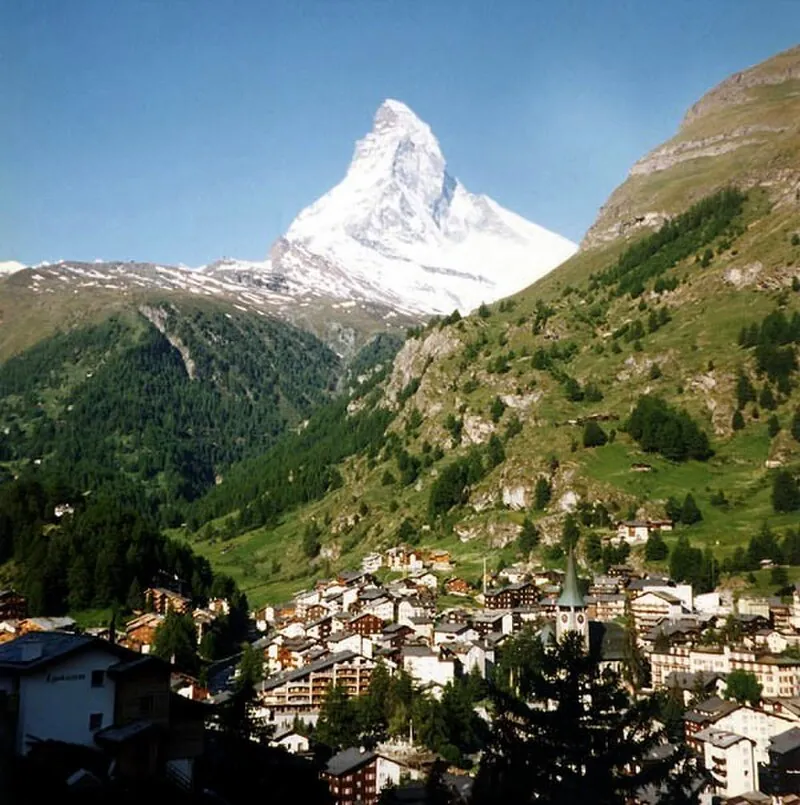
Nestled deep within the Pennine Alps at an elevation of 1,620 metres, Zermatt stands as the quintessential Swiss mountain village. It is a place where modern luxury coexists harmoniously with historic farming traditions, all under the watchful, iconic profile of the Matterhorn. Rising 4,478 metres into the sky, this jagged pyramid of rock and ice is perhaps the most recognizable peak on the planet. For travelers seeking world-class hiking, high-altitude skiing, and refined Alpine hospitality, Zermatt represents the absolute pinnacle of mountain travel. This comprehensive guide covers the logistics, adventures, and cultural highlights required to plan an unforgettable Swiss journey.
The Logistics of a Car-Free Paradise
One of Zermatt's most defining characteristics is that it is entirely car-free. To preserve the pristine Alpine air and quiet village ambiance, combustion-engine vehicles have been banned within the municipality since 1947. This means that your approach to the village requires a small amount of planning, though the Swiss transport system makes the process incredibly efficient.
Most travelers arrive by train. If you are driving, you must park your vehicle in the massive, modern parking terminal in the nearby town of Tasch, located approximately 5 kilometers north of Zermatt. From Tasch, the Matterhorn Gotthard Bahn shuttle trains depart every 20 minutes, delivering you directly into the heart of Zermatt in just 12 minutes. If you hold a Swiss Travel Pass, this shuttle journey is fully covered.
Once you step off the train in Zermatt, you will find a bustling, compact village where the only vehicles are quiet, boxy electric taxis and horse-drawn carriages operated by historic luxury hotels. The village is highly walkable, allowing you to traverse from the southern edge of town to the northern train station in about 25 minutes. Walking along the main street, the Bahnhofstrasse, you will pass luxury watch boutiques, traditional bakeries, bustling outdoor cafes, and historic mountaineering shops that have serviced adventurers for over a century.
Climbing High: Peak Viewing Stations
To truly appreciate the scale of the Pennine Alps, you must ascend above the valley floor. Zermatt is connected to three major high-altitude viewing stations via an extraordinary network of cog railways and cable cars. Each offers a completely unique perspective of the Matterhorn and the surrounding glaciers.
| Viewing Station | Elevation (Metres) | Matterhorn View Profile | Primary Highlight |
|---|---|---|---|
| Gornergrat | 3,089m | Classic northeastern ridge profile | Gorner Glacier and 29 peaks over 4,000m |
| Matterhorn Glacier Paradise | 3,883m | Close-up southern and eastern faces | Year-round snow, ice palace, high summit lift |
| Rothorn | 3,103m | Perfect symmetrical pyramid silhouette | Access to premium sunny hiking trails |
The Gornergrat Railway, which opened in 1898 as Switzerland's first fully electric cog railway, remains the most popular excursion. The train climbs steadily through pine forests and alpine meadows, crossing dramatic stone bridges and offering panoramic views of the valley. At the summit station, you are treated to a stunning view of the Gorner Glacier, the second largest glacier system in the Alps, along with the towering Dufourspitze, the highest peak in Switzerland at 4,634 metres.
For those seeking the highest possible vantage point, the Matterhorn Glacier Paradise cable car carries passengers up to the Klein Matterhorn. This is the highest cable car station in Europe. At the summit, the thin air is noticeably cold, and the views extend all the way to Mont Blanc in France and the Gran Paradiso in Italy. The station features an ice palace carved deep inside the glacier, complete with ice sculptures and historic exhibits detailing the engineering challenges of high-altitude construction.
Summer Adventure: World-Class Hiking
When the winter snow melts, Zermatt reveals a network of over 400 kilometers of marked hiking trails. These trails cater to all fitness levels, ranging from gentle strolls through larch forests to challenging alpine climbs that cross glacier moraines.
The Five Lakes Trail (5-Seenweg) is widely considered the most beautiful day hike in the region. Starting at the Blauherd cable car station, the 9-kilometer trail links five distinct alpine lakes: Stellisee, Grindjisee, Grunsee, Moosjisee, and Leisee. The highlight of this hike occurs at Stellisee and Grindjisee, where on calm mornings, the perfect, mirror-like reflection of the Matterhorn is cast across the still water. The hike is mostly downhill, making it highly accessible for families, and concludes at the Sunnegga funicular station, where children can play at the alpine playground alongside Leisee.
For experienced hikers seeking a more rugged challenge, the Matterhorn Glacier Trail offers a close-up look at the retreating ice. Starting at the Trockener Steg cable car station and ending at Schwarzsee, this trail crosses the gravelly landscape recently vacated by the Furgg and Theodul glaciers. Walking alongside raw rock, glacial silt, and milky green lakes, you feel a profound sense of the earth's dynamic geology. Information panels along the route explain the history of glaciation and the visible impacts of modern climate change on the delicate high-mountain ecosystem.
Winter Sports: Cross-Border Skiing
In winter, Zermatt transforms into one of the world's premier ski resorts, offering 360 kilometers of prepared pistes spread across three distinct sectors: Sunnegga-Rothorn, Gornergrat, and Matterhorn Glacier Paradise. What makes Zermatt's ski arena truly unique is its seamless connection to the Italian resort of Breuil-Cervinia, allowing skiers to start their day in Switzerland and ski down into Italy for a traditional pasta lunch.
The ski area is highly elevated, with the highest lift reaching 3,883 metres, ensuring exceptional snow quality and one of the longest ski seasons in the world. Pistes range from gentle nursery slopes for beginners to steep, challenging mogul fields and vast off-piste itineraries for advanced skiers. The historic ski run from the Klein Matterhorn down to Zermatt village spans a massive 25 kilometers, representing one of the longest continuous ski descents in Europe.
Preserving Alpine History and Gastronomy
Despite its global fame and high-end tourism, Zermatt has managed to retain its authentic Valaisian culture. In the historic heart of the village, known as the Hinterdorf, you can wander past more than thirty traditional barns, storehouses, and chalets built between the 15th and 17th centuries. These structures are constructed from dark, sun-blackened larch wood and rest on large circular stone slabs supported by wooden stilts. This clever architectural design served to prevent mice and other rodents from climbing into the grain stores during the harsh winter months.
The culinary scene in Zermatt is equally famous, boasting a remarkable concentration of award-winning restaurants. Traditional alpine dining is highly celebrated here, with dishes like fondue (melted cheese shared from a communal pot) and raclette (melted cheese scraped onto potatoes, cured meats, and pickles) forming the cornerstone of the local diet. For a memorable experience, seek out one of the historic mountain restaurants scattered along the hiking trails, such as those in the tiny hamlets of Findeln or Zum See. Here, you can dine on gourmet cuisine on sun-drenched wooden terraces, surrounded by the quiet majesty of the Swiss Alps.
Zermatt is more than just a destination; it is an experience that lingers in the memory long after you return home. Whether you are watching the first golden rays of sunrise strike the tip of the Matterhorn, listening to the gentle hum of electric taxis, or dining on local cheese in a 500-year-old wooden chalet, this mountain sanctuary offers a perfect escape from the hectic pace of modern life.
Related: Svalbard Travel Guide: Arctic Wilderness at the Edge of the World | Exploring the Norwegian Fjords: A Journey Through Deep Waters and Towering Cliffs