Argentina is a country of extreme contrasts: Europe-inflected Buenos Aires, where the population descends predominantly from Italian and Spanish immigrants and the café culture is indistinguishable from Milan; Mendoza, a desert wine region at the foot of the highest mountain outside Asia; and Patagonia, where continental ice fields generate glaciers that calve directly into turquoise lakes. The country has experienced significant economic turbulence over the past decade, including a peso crisis that reached hyperinflationary levels in 2023–2024. For international visitors arriving with dollars or euros, this has produced paradoxically exceptional value: one of the world's best steak restaurants costs less than a pub meal in London. This guide covers the main destinations and the currency realities that shape the practical experience of visiting.
Buenos Aires: Neighbourhoods, Steak, and Culture
Buenos Aires is one of the great cities of the world for walking, eating, and staying up late. The city is divided into 48 barrios; the following four are the most relevant for first-time visitors.
La Boca, the neighbourhood along the Riachuelo river in the south of the city, is famous for the brightly painted tin-clad houses of Caminito, a pedestrian street that was painted in its current form in the 1950s by local artist Benito Quinquela Martín. It is visually striking, genuinely colourful, and very popular with tour groups. The immediate Caminito area attracts pickpockets; keep bags closed and phones in pockets on the main street. The rest of La Boca, beyond the tourist strip, is a working-class neighbourhood and should be explored with a guide or on an organised tour after dark.
San Telmo, a colonial-era barrio south of the city centre, hosts the Sunday Feria de San Telmo antiques market along Defensa Street. Stalls run for 15 blocks from Plaza Dorrego to Parque Lezama, selling everything from silver maté sets and 1920s tango memorabilia to vintage clothing and taxidermy. The market runs from approximately 10am to 5pm and draws both locals and tourists. Palermo, the large residential barrio to the north, is the restaurant and bar district of Buenos Aires. It subdivides into Palermo Soho (boutiques and cafés), Palermo Hollywood (restaurants and media companies), and Las Cañitas (quieter residential dining). International rankings including the 50 Best Restaurants Latin America list consistently place multiple Palermo restaurants in the top tier for South America.
Recoleta Cemetery (Cementerio de la Recoleta) is free to enter and is genuinely one of the most extraordinary public spaces in the world. Over 4,800 mausoleums are packed into a grid of marble streets, the largest and most ornate belonging to Argentine presidents, military heroes, and aristocratic families. Eva Perón (Evita) is buried in the Duarte family vault (follow the signs or the crowds). The cemetery is open daily from 7am to 5:30pm. Teatro Colón, the opera house on Avenida 9 de Julio, is ranked among the five best opera houses in the world for acoustics and architecture. Guided tours of the auditorium cost approximately $10 and run daily; tickets to performances run from $15 for upper gallery to $200+ for orchestra stalls.
The Steak: A Practical Guide
Argentine parrilla (grill) culture centres on beef from grass-fed cattle raised on the Pampas. The most relevant cuts: bife de chorizo (sirloin), bife de lomo (tenderloin, the most tender), vacío (flank steak, the most commonly eaten cut by locals), entraña (skirt steak, strong flavour, quick cook), and asado de tira (short ribs, slow-cooked). "Jugoso" means rare to medium-rare; "a punto" is medium; "bien cocido" is well done. Argentine beef is usually served at "a punto" by default unless specified otherwise.
Don Julio in Palermo Hollywood was ranked the best restaurant in Latin America by the 50 Best Restaurants awards in 2020 and 2021 and remains the most decorated parrilla in Buenos Aires. A full dinner for two with a bottle of Malbec costs approximately $80–100 at current exchange rates, which is extraordinary given its global ranking. Book 3–4 weeks ahead via their website. El Preferido de Palermo, in Palermo Soho, is a more casual neighbourhood bodegón (traditional restaurant) that has operated since 1952; a full lunch with wine costs approximately $25–35 per person.
Mendoza: Wine Country and Aconcagua
Mendoza, 1,050 kilometres west of Buenos Aires by air (1 hour 40 minutes, from approximately $60), sits at 750 metres in the Cuyo desert at the foot of the Andes. The region produces 70% of Argentina's wine, with Malbec as the signature variety: the high altitude, intense sun, dry air, and dramatic diurnal temperature variation (warm days and cold nights) produce a fruit concentration and tannic structure that Malbec grown at lower elevations cannot achieve.
The two main wine sub-regions are Luján de Cuyo (the historical centre of Malbec production, 25 kilometres south of Mendoza city) and Maipú (closer to the city, known for older plantings and accessible by bicycle). Maipú's winery cluster is uniquely bikeable: bike hire from Mr Hugo ($15–20 per day, including a lock and helmet) allows visitors to cycle between 8–12 bodegas in a day, with distances of 3–7 kilometres between major producers. The bodegas of Trapiche, Familia Zuccardi, and Achaval-Ferrer all offer tours and tastings from approximately $15–30 per person. Achaval-Ferrer's Finca Altamira single-vineyard Malbec regularly features in Wine Spectator's top-100 lists.
Aconcagua, at 6,961 metres, is the highest peak outside Asia and the highest point in both the Western and Southern Hemispheres. Serious mountaineering expeditions approach from Los Penitentes via the Horcones Valley and require permits costing $1,000–1,500 for the main season (January–February). For non-climbers, the Horcones lagoon viewpoint, 3 kilometres from the park entrance, provides a clear view of the south face on cloudless days. The park entrance is at Puente del Inca, 170 kilometres west of Mendoza on Ruta Nacional 7, the highway to Santiago de Chile.
Patagonia: Perito Moreno and El Chaltén
Patagonia, the vast windswept region at the southern end of the continent, is shared between Argentina and Chile. The Argentine highlights are concentrated in Santa Cruz province, accessible by flights from Buenos Aires (3–4 hours to El Calafate) with LATAM and Aerolíneas Argentinas.
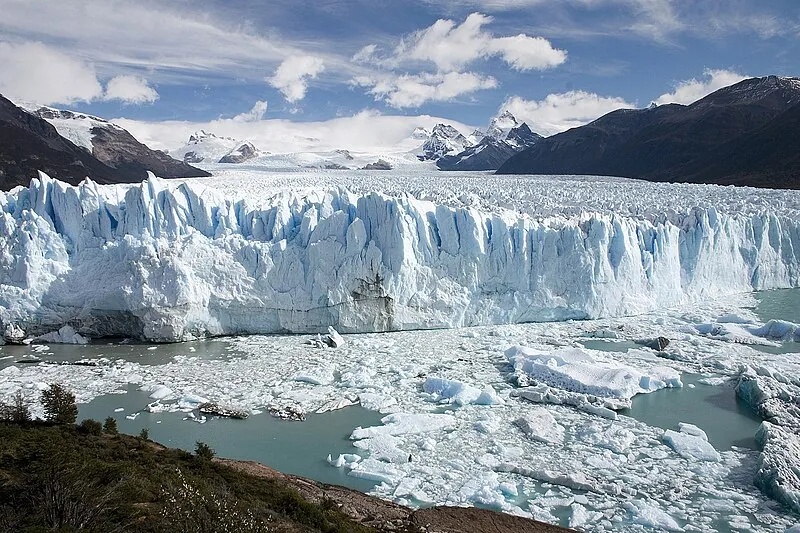
Perito Moreno Glacier in Los Glaciares National Park is one of the world's most accessible large glaciers and one of the very few still advancing. The glacier advances at approximately 2 metres per day, calving sheets of ice into Lago Argentino with a sound like cannon fire. Boardwalk viewing platforms above the lake provide free access to the glacier face once inside the park; entry costs approximately €21 (paid in pesos at the park gate at current exchange rates). Ice trekking on the glacier surface is available through local operators (approximately $100–150 per person for a 90-minute guided walk in crampons).
El Chaltén, a village of 2,000 people 220 kilometres north of El Calafate, is the trekking capital of Patagonia. The town was founded only in 1985 and sits at the foot of the Fitz Roy massif, whose granite towers are among the most recognisable mountain silhouettes in the world (they appear on the Patagonia clothing brand logo). The Laguna de los Tres trail is the standard route to Fitz Roy base: 22 kilometres return, climbing 800 metres to a glacial lake directly beneath the north face of Fitz Roy (3,405m). The trail starts in town, is free of charge, and takes 8–10 hours return. No permits are required. Conditions are highly changeable: Patagonia has its own micro-weather system and the mountain may be cloud-covered for days at a time. Plan for a minimum of 3 nights in El Chaltén to maximise the chance of a clear day.
Currency and Practical Notes
Argentina's currency situation requires specific attention. The official peso exchange rate is set by the Argentine Central Bank and has historically been significantly less favourable than the parallel market rate. In 2023 and into 2024, the gap between the official rate and the blue (parallel market) rate ranged from 50% to 100%, meaning that visitors exchanging currency outside the banking system received dramatically more pesos per dollar. President Milei's administration, which took office in December 2023, unified the exchange rate as part of a shock therapy economic reform programme; by early 2025, the official and parallel rates had converged significantly. The position continues to evolve: check DolarToday or a recent traveller forum immediately before travelling for current guidance. Paying in dollars or euros at hotels, restaurants, and tour operators that accept them can offer advantageous pricing; ask whether prices are quoted in dollars or pesos and what the conversion rate being applied is.
Best time to visit: Buenos Aires is pleasant year-round, with the most comfortable temperatures in spring (September–November) and autumn (March–May). Patagonia's trekking season runs November through March; outside this window the weather at altitude is genuinely harsh. Mendoza's harvest (vendimia) runs February through April and includes wine festivals and open cellars.
Related: Colombia Travel Guide: Medellín, Cartagena, and the Coffee Region | Peru and Machu Picchu: The Complete Travel Guide