The Rocky Mountains of Alberta and British Columbia — the Canadian Rockies — are among the world's great mountain landscapes: a 1,500km-long arc of limestone, quartzite, and shale peaks reaching 3,000–4,000m, their glaciated summits feeding rivers that flow east to the Arctic and west to the Pacific, their valleys containing a density of turquoise lakes, ancient glaciers, hanging waterfalls, and wildlife that is without parallel in accessible North America. The two national parks at the heart of this landscape — Banff (established 1885, Canada's first national park) and Jasper (established 1907) — together constitute a UNESCO World Heritage Site of 20,736 square kilometres, connected by one of the most extraordinary road journeys on Earth: the Icefields Parkway. To drive this road once, in good conditions, in the right season, is to understand why landscape photography exists.
Banff National Park: The Icons
Lake Louise
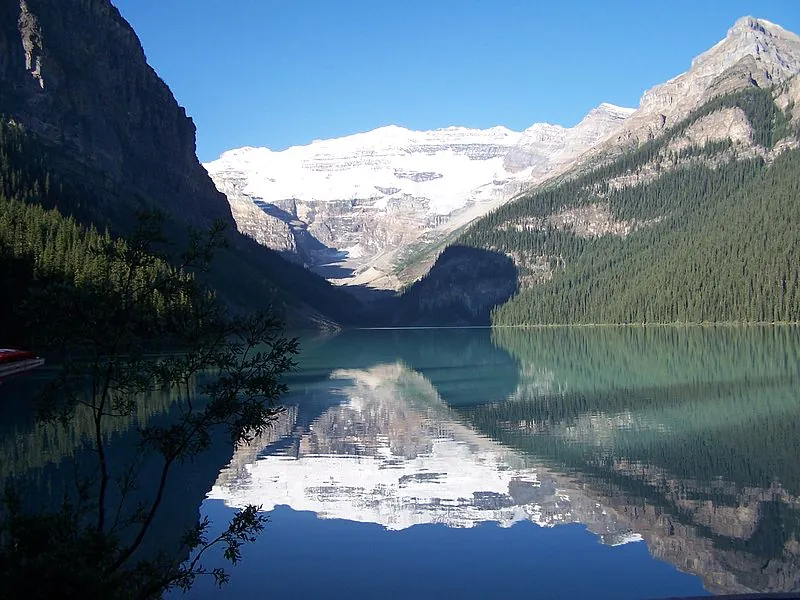
The lake's colour — an almost artificial-seeming milky turquoise — is the result of rock flour: fine glacial sediment ground from the bedrock by the Victoria Glacier above the lake, suspended in the meltwater, and scattering blue and green wavelengths of light in a way that makes the water appear to glow. This is the physical explanation. The emotional response, standing on the lakeshore at 6am when the mist is still on the water and the Chateau is reflected in the surface and no one else is there yet, resists any explanation. Lake Louise is crowded at peak season by midday — arrive before 7am or after 5pm. The Plain of Six Glaciers trail (14km return from the lakeshore, gaining 370m) leads above the treeline to a teahouse at the foot of the Victoria Glacier — one of the finest half-day mountain hikes in North America.
Moraine Lake
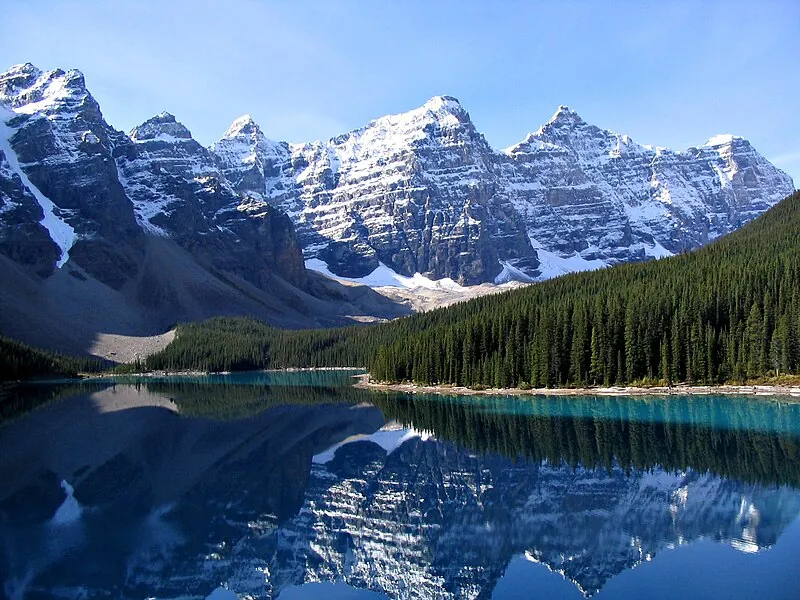
Ten kilometres from Lake Louise via a separate road (closed October–May due to avalanche risk), Moraine Lake — the "20 dollar lake," as it appeared on the Canadian $20 bill until 1993 — is, if anything, more visually overwhelming than Lake Louise. The backdrop is the Valley of the Ten Peaks — a wall of ten named summits rising from the valley head — reflected in the same glacial turquoise water. The viewpoint above the lakeshore (reached by a short scramble up the moraine pile at the lake's north end) is the precise vantage point of the old $20 bill photograph. Moraine Lake Road now requires a shuttle bus reservation from the Parks Canada system — private vehicle access was restricted from 2022 due to unsustainable visitor volumes. Book early.
Banff Town and Sulphur Mountain
The town of Banff — population approximately 8,000, located within the national park boundary — is the service centre of the region: hotels, restaurants, gear shops, and the Banff Centre for Arts and Creativity (a significant arts institution in an improbable mountain setting). The Banff Upper Hot Springs (natural mineral hot pools at 1,585m) have been operating since 1886. The Sulphur Mountain Gondola ascends to 2,281m for panoramic views of the Bow Valley and six mountain ranges; the summit trail to the historic Sanson's Peak meteorological station (staffed continuously from 1903 to 1931 by Norman Sanson, who climbed the mountain 1,000 times to take weather readings) adds a layer of human history to the landscape.
The Icefields Parkway: 232 Kilometres of Extraordinary
The Icefields Parkway (Highway 93) connects Lake Louise in Banff National Park to Jasper townsite in Jasper National Park — 232km of road that has been called the most beautiful drive in the world, and the description holds. The road passes through the heart of the Columbia Icefield (the largest icefield south of the Arctic Circle, approximately 325 km²), traverses multiple high mountain passes, and follows glacial river valleys lined with peaks that have never been developed, farmed, or significantly altered. Key stops:
- Bow Lake (km 40 from Lake Louise): Another glacially-fed turquoise lake, this one dominated by the Crowfoot Glacier — named for a three-clawed "foot" of glacial ice on the valley wall that has shrunk significantly since the name was given in the 19th century. The Num-Ti-Jah Lodge, operating since 1923, sits on the lakeshore.
- Peyto Lake: Accessed by a short walk from the Bow Summit (the parkway's highest point at 2,069m), Peyto Lake's viewpoint is one of the most celebrated in the Rockies — the lake, shaped like a wolf's head from above, is an almost implausible combination of colours: vivid turquoise against the pine and rock of the surrounding valley.
- Columbia Icefield and Athabasca Glacier: The Columbia Icefield sits at the hydrological apex of North America — meltwater from it flows to three oceans (Pacific, Atlantic/Hudson Bay, and Arctic). The Athabasca Glacier descends from the icefield to within 300m of the parkway, accessible by a short walk. Markers along the moraine record its recession since 1890 — each marker shows where the glacier terminus stood at various dates, and the distance between the 1890 marker and the current terminus (approximately 1.5km) is one of the most vivid physical demonstrations of climate change available anywhere. Ice Explorer tours (modified large-wheeled vehicles) drive onto the glacier surface.
- Sunwapta Falls and Athabasca Falls: Two waterfalls near the northern end of the parkway — Athabasca Falls in particular, where the Athabasca River is forced through a narrow canyon of quartzite, is one of the most powerful and photogenic falls in the Rockies despite dropping only 23m.
Jasper National Park: Wildlife and Wilderness
Jasper is larger, wilder, and less visited than Banff — a deliberate policy difference that has preserved a more intact wilderness character. The townsite of Jasper (population approximately 5,000) is smaller and less touristically developed than Banff, and the surrounding landscape reflects this: elk walk through the town centre routinely; bears (both black and grizzly) are regularly seen along the parkway; wolf packs inhabit the Athabasca Valley. Jasper's iconic attractions:
- Maligne Lake: The second-largest natural lake in the Rockies (22km long), accessible by road from Jasper. The famous Spirit Island viewpoint — a small island in a narrow southern arm of the lake, framed by mountain peaks — is accessible by boat tour and is among the most photographed scenes in Canada. The road to Maligne Lake passes through Maligne Canyon, a 55m-deep limestone slot canyon with six bridges spanning increasingly narrow sections.
- Miette Hot Springs: The hottest natural mineral springs in the Canadian Rockies (53.9°C at source, cooled to 40°C in the outdoor pools), 60km from Jasper via a road through prime bighorn sheep and elk habitat.
- Wildlife: Jasper's wildlife viewing is genuinely world-class. Elk are almost guaranteed (particularly in town in autumn rut — impressive and occasionally alarming). Bighorn sheep and mountain goats frequent rocky areas near the parkway. Black bear sightings are common in spring and autumn. Grizzly bear sightings — rarer but real — are possible throughout the park.
Practical Information
- Getting there: Calgary International Airport (YYC) — 1.5 hours to Banff. Edmonton International Airport (YEG) — 4 hours to Jasper. The most logical approach is a loop: fly into Calgary, drive to Banff, drive the Icefields Parkway to Jasper, fly home from Edmonton (or drive back via Highway 11).
- Best time: Mid-June to mid-September for road access, hiking, and optimal wildlife activity. July–August: crowded but full facilities. Late September–October: larch trees turn gold (the "larch season" around Larch Valley and Paradise Valley near Lake Louise is one of the finest autumn colour displays in North America). Winter (November–March): exceptional for cross-country skiing, snowshoeing, and ice walks.
- Parks pass: A Parks Canada Discovery Pass is required and covers all national parks — available at park gates or online.
- Accommodation: Book far in advance. The Fairmont Chateau Lake Louise and Fairmont Banff Springs are iconic but expensive; the town of Banff has excellent mid-range options; campgrounds within both parks are reservable through the Parks Canada system.
Related: Vancouver: Canada's Most Beautiful City | Route 66: Driving America's Most Famous Road