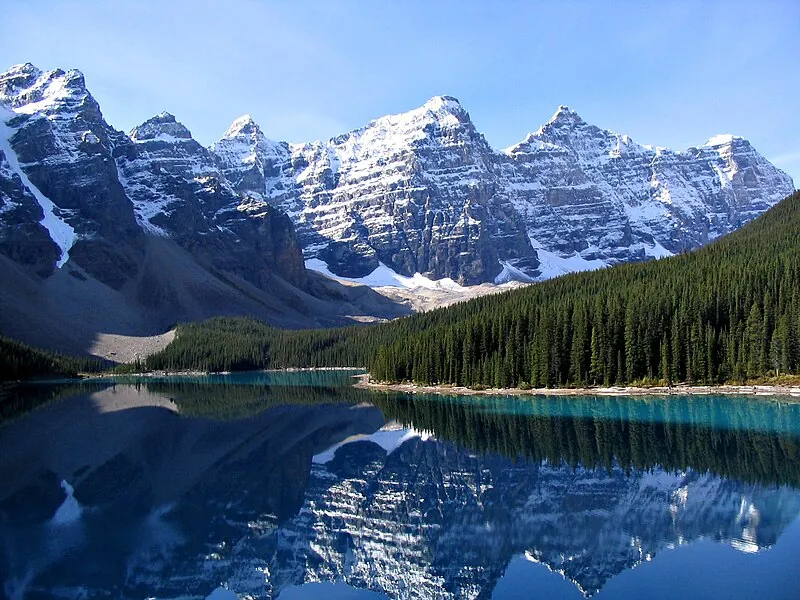
There is a moment that happens to almost every first-time visitor to Vancouver, usually on the first clear morning, when the scale of the city's natural setting becomes suddenly, viscerally apparent: the downtown glass towers rising from the peninsula between English Bay and Burrard Inlet, and behind them — directly behind them, not in the distance but immediately present — the snow-capped peaks of the Coast Mountains rising to 1,500–2,000m, close enough to read the ridgelines, close enough to see the ski runs of Grouse Mountain from the street. No other major city in North America is as immediately, overwhelmingly situated in landscape as Vancouver. The mountains are not a backdrop. They are participants in the city. And the ocean — English Bay to the west, Indian Arm and the fjords to the north — completes the encirclement. Vancouver is, by almost any measure, the most naturally dramatic city setting on the continent. The question for visitors is how to move between its many registers — urban sophistication, outdoor wilderness, Pacific cultural diversity, and a food scene shaped by one of the world's most interesting demographic intersections — in the time available.
Stanley Park: Old-Growth Forest in a City
A 405-hectare peninsula of old-growth and second-growth temperate rainforest at the edge of downtown Vancouver, Stanley Park is one of the great urban parks of the world — not in the manicured Central Park sense, but in the sense of genuine wilderness pressed against city streets. Douglas fir trees 60–70m tall, standing for 500+ years, shade the main trails. The 9km Seawall — a paved path circling the park's perimeter at water level — is Vancouver's defining recreational experience: on a clear day, the walk or cycle takes you from the marina of Coal Harbour along the shore of English Bay with views of the Lions Gate Bridge and North Shore mountains, past the famous Siwash Rock (a distinctive rock formation sacred in Squamish Nation tradition), around the point, and back through the beaches of English Bay. At any time of day, on any day of the year, the Seawall has Vancouverites running, cycling, and walking — rain gear in November, sunglasses in July.
Inside the park: the totem poles of Brockton Point (a collection of replicas of First Nations poles from Haida, Kwakwaka'wakw, and other nations — the originals are in protected collections; the display creates an important point of Indigenous cultural acknowledgment at the heart of the city), the Lost Lagoon (a freshwater lake that is a bird sanctuary and the domain of swans and herons), and the dense forest trails where the city entirely disappears.
The Food: Where Four Continents Meet
Vancouver's food scene is one of the most genuinely diverse in the world — a consequence of its demographics. The Greater Vancouver area has a population that is approximately 50% of Asian descent (Chinese, South Asian, Korean, Japanese, Filipino, Vietnamese — communities that arrived in waves from the 1850s to the present), with the result that the authentic Asian food available rivals what you'd find in the cities of origin. This is not fusion or adaptation — it is the real thing, produced by communities that maintained culinary traditions across generations.
- Richmond (the suburb immediately south of Vancouver) is home to one of the world's most concentrated Chinese and East Asian food scenes — a "Golden Village" of restaurants, supermarkets, and food courts where Cantonese dim sum, Shanghainese soup dumplings, Sichuan hot pot, Taiwanese beef noodle soup, and Hong Kong-style roast duck exist at the level of quality found in the source cities. The Richmond Night Market (May–October) is the largest night market in North America, attracting 200,000+ visitors per weekend.
- Granville Island Public Market: Under the Granville Bridge on the south shore of False Creek, the covered market is Vancouver's most important food gathering place — fresh Pacific salmon, local Dungeness crab, BC cheeses, artisan bakers, a permanent population of food vendors. The salmon here is the point: wild Pacific salmon (chinook, sockeye, coho) in season is one of the finest fish in the world, and Vancouver is the best place on Earth to eat it.
- Japanese food: Vancouver's Japanese food scene — particularly in the West End and Robson Street area — is exceptional. The city's Japanese-Canadian community (established before WWII, devastated by the wartime internment, gradually rebuilt) combined with recent Japanese immigration and the strong cultural connection between Vancouver and Japan has produced a density of quality ramen, sushi, izakaya, and kaiseki that surprises most visitors.
The North Shore: Mountains Within Reach
From downtown Vancouver, the SeaBus (a foot passenger ferry) crosses Burrard Inlet to North Vancouver in 12 minutes, placing you at the base of the mountains. From there:
- Grouse Mountain: A gondola ascends 1,100m to a ski resort in winter and hiking destination in summer, with views back over Vancouver, the Gulf Islands, and on clear days, the Olympic Peninsula in Washington State. The Grouse Grind — a 2.9km trail gaining 850m — is Vancouver's most famous fitness challenge, climbed by tens of thousands annually.
- Lynn Canyon Suspension Bridge: Free (unlike the commercial Capilano Suspension Bridge downtown), spanning a genuine temperate rainforest canyon 50m above the Lynn Creek. The surrounding Lynn Canyon Park has swimming holes and hiking trails of considerable beauty.
- Whistler: Two hours north of Vancouver by the Sea-to-Sky Highway (one of the most dramatic road drives in Canada), Whistler-Blackcomb is North America's largest ski resort by skiable terrain — and an excellent mountain biking and hiking destination in summer. The Sea-to-Sky corridor passes through Squamish, the rock climbing capital of Canada (the Stawamus Chief — a 700m granite monolith — is one of the world's great climbing objectives).
Indigenous Culture: The Nations Whose Land This Is
Vancouver sits on the unceded traditional territories of the Musqueam, Squamish, and Tsleil-Waututh Nations — a fact acknowledged in the territory acknowledgments that open public events throughout the city. This acknowledgment reflects a growing and meaningful engagement with Indigenous history in a city where that history includes the Indian Residential School system (the last of which closed only in 1996), the 1913 McKenna-McBride Commission's systematic reduction of reserve lands, and the persistent impacts of colonial dispossession.
The Museum of Anthropology at the University of British Columbia (designed by Arthur Erickson, opened 1976) is the finest museum of Northwest Coast First Nations art in the world — the Great Hall contains monumental works by Haida, Kwakwaka'wakw, and other nations, presented not as ethnographic specimens but as works of art in the full sense. The museum's collections include works by Bill Reid (Haida, 1920–1998), whose monumental bronze sculpture The Spirit of Haida Gwaii — a canoe loaded with figures of Haida mythology — is also visible in the departure hall of Vancouver International Airport. Spending a morning at MOA is one of the most genuinely important cultural experiences available in Canada.
Practical Information
- Getting there: Vancouver International Airport (YVR) — major hub with direct flights from across North America, Europe, and Asia. The Canada Line SkyTrain connects the airport to downtown in 25 minutes for approximately CAD $4.
- Getting around: TransLink (bus + SkyTrain + SeaBus) covers most destinations; the system is reliable and affordable. Rent a bike for Stanley Park and the Seawall. Car hire needed for Whistler or interior BC.
- Best time: July–September for warm weather and maximum daylight (18+ hours in June). December–March for skiing. April–June and October–November: the famous Pacific Northwest rain — lush, cool, and beautiful in its own right, but be prepared.
- Neighbourhoods: Stay in the West End (walkable to Stanley Park and beaches), Gastown (historic, central, good food), or Kitsilano (residential, beach-adjacent, neighbourhood feel).
Related: The Rocky Mountains: Banff, Jasper, and the Greatest Mountain Drive | San Francisco: The City That Reinvents Itself