Canada is the world's second-largest country by land area, stretching 5,500km from the Pacific to the Atlantic and containing some of the Earth's most dramatic and least-modified natural landscapes. The challenge for any visitor planning a first trip is that the country's scale makes a "see Canada" itinerary impossible: Vancouver and Montreal are as different in culture, climate, and character as Sydney and Edinburgh, and the national parks of British Columbia and Alberta alone could occupy two weeks of dedicated exploration. The practical approach is to choose a region and commit to it. For first-time visitors from Europe, the British Columbia and Alberta combination (Vancouver to the Canadian Rockies) is the most rewarding single itinerary for the effort of getting there.
Vancouver: Three Days on the Pacific
Vancouver (population 2.6 million in the metro area) is consistently ranked among the top three most liveable cities in the world by the Economist Intelligence Unit, and a visit makes clear why: the city sits between the Pacific Ocean and the Coast Mountains, with a temperate, rainy climate that keeps the surrounding landscape a deep green year-round. The combination of urban sophistication (Vancouver has the most ethnically diverse population of any Canadian city, producing a restaurant scene that spans every Asian cuisine from Sichuan to Japanese to Vietnamese) with immediate access to wilderness (Grouse Mountain is 15 minutes from downtown; ski resorts at Whistler are 2 hours north) is unusual in any North American city.
- Stanley Park: A 1,001-acre old-growth forest park attached to downtown Vancouver by a narrow land bridge, containing 8.8km of seawall (cycling or walking), the Vancouver Aquarium, totem poles from several First Nations communities, and views of the North Shore mountains across Burrard Inlet. The seawall walk or cycle in either direction is the best introduction to the city's geography. Bike hire is available at the park entrance for approximately CA$8 to CA$12 per hour.
- Granville Island: A former industrial peninsula under the Granville Street Bridge, now housing a public market (the best food market in Canada, with fresh Pacific salmon, local cheeses, and outstanding prepared food stalls), artists' studios, and a brewery district. The ferry across False Creek from Yaletown (approximately CA$4 each way) is more atmospheric than walking.
- Gastown and Chinatown: The historic core of Vancouver; Gastown's steam clock (built 1977) is a tourist attraction of dubious charm, but the neighbourhood's Victorian brick warehouse buildings now house some of the best independent restaurants in the city. Vancouver's Chinatown is one of the oldest in North America (established 1858), and the Dr. Sun Yat-Sen Classical Chinese Garden (a full-scale Ming dynasty scholar's garden constructed by craftsmen from Suzhou) is one of the most extraordinary small-scale experiences in the city.
The Canadian Rockies: Banff and Jasper
The Canadian Rockies straddle the border of British Columbia and Alberta, containing four contiguous UNESCO World Heritage national parks: Banff, Jasper, Kootenay, and Yoho. The combined area covers 20,160 km², encompassing glaciers, turquoise glacial lakes, hot springs, and wildlife (black bears, grizzly bears, wolves, elk, bighorn sheep, and mountain goats) in concentrations unusual for North American national parks. Entry passes (Parks Canada Discovery Pass): CA$145 per adult per year or CA$72 for a one-day vehicle pass.
Banff National Park
Canada's oldest national park (established 1885) and the most visited in the country, with 4 to 5 million annual visitors. Banff town (population 7,500, the only incorporated municipality entirely within a Canadian national park) provides the service infrastructure; the natural attractions extend across the park's 6,641 km²:
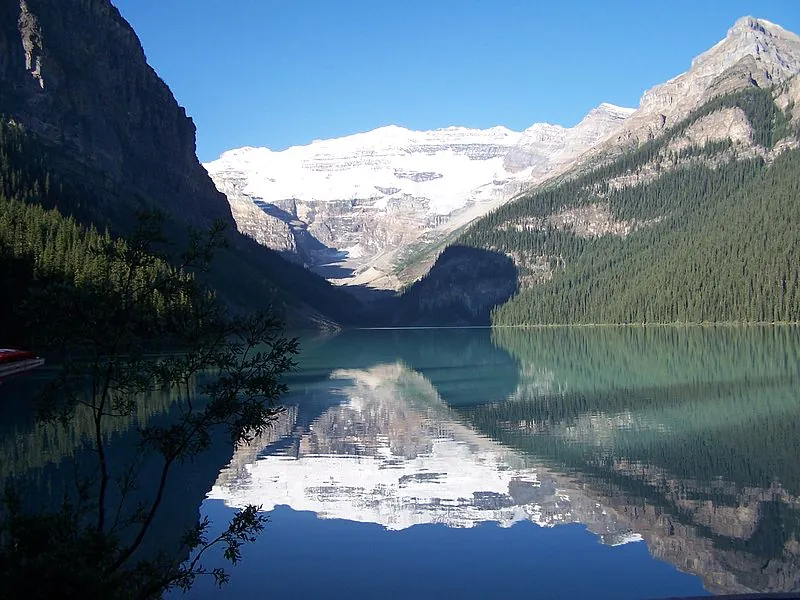
- Lake Louise: A glacially-fed turquoise lake at the base of the Victoria Glacier, surrounded by mountains, with the Fairmont Chateau Lake Louise on the shoreline (iconic if expensive; £300 to £800 per night). The lakeside walk (around the lake, 5.5km) and the Plain of Six Glaciers trail (14km, moderate, to the tea house at the toe of the Victoria Glacier) are the two best walks from the lake. Parking is severely limited in summer; the Parks Canada shuttle from Banff is strongly recommended from June to September.
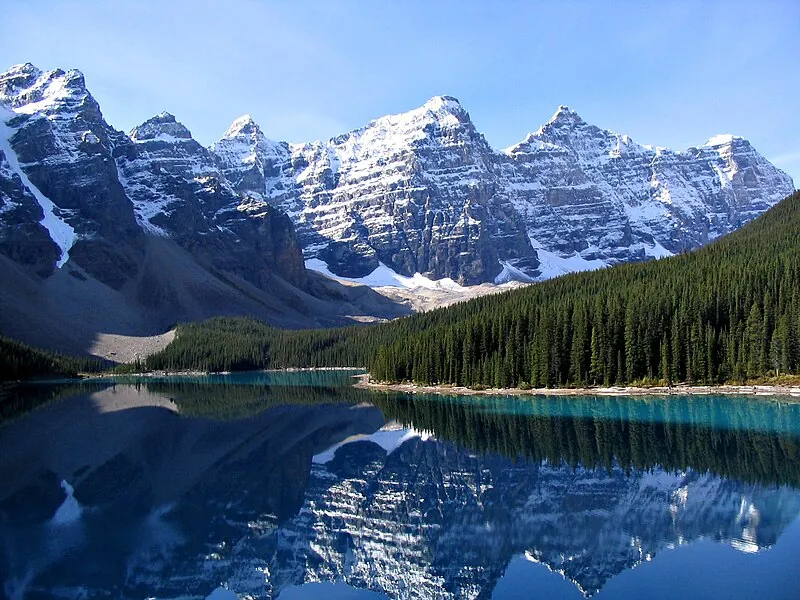
- Moraine Lake: 14km from Lake Louise, in the Valley of the Ten Peaks. The turquoise colour of the water is more intense than Lake Louise; the surrounding peaks are more dramatic. Previously one of Canada's most recognisable images (on the $20 bill); now one of its most crowded sites in summer. The Parks Canada reservation system (CA$10) is required to access the road by car from late May to mid-October; the shuttle from Lake Louise is the practical alternative.
- Icefields Parkway (Highway 93A): A 230km road from Lake Louise north to Jasper, consistently cited as one of the world's most beautiful drives. The Columbia Icefield (the largest in the Canadian Rockies outside Alaska; 325 km², source of three major river systems) is accessed from the Icefields Centre on the parkway; Athabasca Glacier walks are guided (CA$95 to CA$165 per person).
Jasper National Park
Jasper (area 11,228 km², the largest national park in the Rockies) is less visited than Banff and correspondingly more wildlife-rich. Maligne Lake (the largest natural lake in the Rockies, 22km long) and the canyon of Maligne Canyon (6km trail through limestone slot canyon with waterfalls) are the primary day trip destinations. Jasper town is smaller and quieter than Banff; bear activity is consistently higher in Jasper, and the Parks Canada advice to travel in groups and carry bear spray should be taken seriously.
Whistler: North America's Best Ski Resort
Whistler Blackcomb (2 hours north of Vancouver on the Sea to Sky Highway) is consistently ranked among the top five ski resorts in North America and the top ten worldwide: 8,171 acres of skiable terrain on two connected mountains, 200 named runs, and snowfall averaging 11 metres per season. The winter season (December to April) is the primary draw; summer at Whistler provides hiking, mountain biking (Whistler Mountain Bike Park: CA$75 to CA$95 per day for trail access plus bike hire), and the Peak 2 Peak Gondola (the world's longest and highest unsupported span for a gondola system: 3.024km between Whistler and Blackcomb peaks, 436m above the valley floor).
Practical Information
- Getting around: A rental car is essential for the Rockies; there is no practical public transport between Banff, Jasper, and the Icefields Parkway attractions. Vancouver is navigable by public transit (the SkyTrain connects the airport to downtown in 25 minutes). Driving from Vancouver to Banff takes approximately 9 to 10 hours; the Greyhound bus route between these cities no longer operates.
- Best time: June to September for the Rockies and Vancouver (wildflowers July to August; best weather). December to March for skiing. Avoid August long weekend (August BC Day) when the Rockies parks reach capacity.
- Budget: Canada is comparable to the UK in cost. Accommodation in Banff and Whistler: CA$180 to CA$400 per night. Restaurant meals: CA$20 to CA$50 per person. Vancouver accommodation: CA$150 to CA$350 per night. Converting to GBP: multiply by approximately 0.57 (2025 rate).
Related: New Zealand: South Island, North Island, and the Lord of the Rings Landscape | Australia Travel Guide: Sydney, Melbourne, and the Great Barrier Reef